How to Use the Minor Pentatonic Scale for Solos offers a deep dive into one of the most essential tools for musicians, providing an understanding of its structure, historical significance, and its widespread use across various genres.
This scale, consisting of five notes, is not only foundational for soloing but also serves as a canvas for emotional expression in music. By exploring its notes and famous examples, musicians can appreciate the power and versatility that the minor pentatonic scale brings to their solos.
Introduction to the Minor Pentatonic Scale
The minor pentatonic scale is a five-note scale that serves as one of the foundational elements in music theory, particularly in the fields of rock, blues, and jazz. This scale is essential for improvisation and soloing, making it a favorite among musicians and composers. Understanding its structure, historical significance, and applications in popular music can greatly enhance one’s musical repertoire.The structure of the minor pentatonic scale consists of five specific notes derived from the natural minor scale.
These notes include the root, minor third, fourth, fifth, and minor seventh. To illustrate, in the A minor pentatonic scale, the notes are A, C, D, E, and G. This combination of notes creates a sound that is both versatile and emotionally resonant, allowing it to fit seamlessly in various musical contexts.
Historical Significance in Music Genres
The minor pentatonic scale has a rich history and has played a pivotal role across various musical genres, including blues, rock, country, and jazz. Its origins can be traced back to African music traditions, where it was used in folk songs and spirituals. As African Americans migrated to urban areas, they brought this scale with them, which became a fundamental component of blues music.The scale’s influence is notable in the works of prominent musicians and bands.
Many iconic songs utilize the minor pentatonic scale, showcasing its adaptability and appeal. Examples of such songs include:
- “Black Magic Woman” by Santana
- “Stairway to Heaven” by Led Zeppelin
- “Sweet Child O’ Mine” by Guns N’ Roses
- “Smoke on the Water” by Deep Purple
- “Little Wing” by Jimi Hendrix
These examples demonstrate how the minor pentatonic scale can evoke strong emotions and complement a variety of musical styles. Its simplicity allows musicians of all skill levels to create compelling solos and melodies, making it an enduring element in the music landscape.
“The minor pentatonic scale is a powerful tool for expression, enabling musicians to connect with audiences through its emotive qualities.”
Importance of the Minor Pentatonic Scale for Solos
The minor pentatonic scale holds a significant place in the realm of musical improvisation, particularly for soloists across various genres. Its simplicity and versatility make it a favored choice among musicians looking to convey deep emotional narratives in their performances. This scale’s structure allows for seamless integration within many musical styles, making it an essential tool for any aspiring soloist.The minor pentatonic scale is cherished for its ability to evoke a wide array of emotions, which is primary to the art of soloing.
Its five-note structure—composed of the root, minor third, fourth, fifth, and minor seventh—creates a distinctive sound that is both haunting and melodious. This scale allows musicians to express feelings of melancholy, tension, or introspection, resonating with audiences on a profound level. The use of this scale can result in solos that feel both raw and authentic, tapping into the listener’s emotions directly.
Emotional Qualities of the Minor Pentatonic Scale
The minor pentatonic scale is characterized by its unique sound that can convey various emotional qualities. Some of the key emotions associated with this scale include:
- Melancholy: The minor third interval lends a somber tone, allowing for expressive playing that evokes feelings of sadness.
- Tension: The absence of certain intervals found in major scales creates a sense of suspense, inviting listeners to engage with the music’s emotional depth.
- Introspection: The scale encourages a reflective mood, ideal for solos that explore personal narratives or inner thoughts.
The effectiveness of the minor pentatonic scale in conveying these emotions makes it a preferred choice among soloists who aim to connect with their audience on a deeper level.
Comparative Analysis of Scales in Solos
When comparing the minor pentatonic scale to other scales utilized in solos, such as the major scale or the blues scale, several differences become apparent in their application and emotional conveyance.
- Major Scale: While the major scale conveys a brighter, more uplifting mood, the minor pentatonic scale offers a more somber and reflective sound that resonates with the complexities of human emotion.
- Blues Scale: Although the blues scale adds the blue notes to the minor pentatonic, enhancing its expressiveness, the fundamental simplicity of the minor pentatonic allows for faster improvisation and clarity of musical ideas.
- Whole Tone Scale: This scale creates an ambiguous sound, often lacking the emotional weight carried by the minor pentatonic, which can deliver poignant feelings through its straightforward intervals.
The minor pentatonic scale’s accessibility and emotional depth make it an invaluable asset for soloists, enabling them to craft memorable musical statements that resonate with their audience while maintaining clarity and impact in their improvisation.
Techniques for Playing the Minor Pentatonic Scale

The minor pentatonic scale is not only a fundamental aspect of modern music but also a versatile tool for expressing emotion and creativity through solos. Mastering various techniques while using this scale can elevate a guitarist’s playing and enhance improvisational skills. This section explores essential techniques such as finger positioning, bending, sliding, and hammer-ons, which are integral to effectively utilizing the minor pentatonic scale.
Finger Positioning and Techniques for Guitarists
Proper finger positioning is crucial when playing the minor pentatonic scale. It allows for fluid movement across the fretboard and facilitates the execution of various techniques. Typically, the scale can be played using the following finger positioning:
- Index Finger: Used for notes located on the first fret.
- Middle Finger: Used for notes located on the second fret.
- Ring Finger: Used for notes on the third fret.
- Little Finger: Employed for reaching notes on the fourth fret, particularly on higher strings.
A common fingering for the A minor pentatonic scale, for example, starts with the open A string (5th string) and follows a pattern that utilizes these fingers. This foundational positioning enables seamless transitions between notes, particularly when combined with various techniques.
Bending Techniques Using the Scale
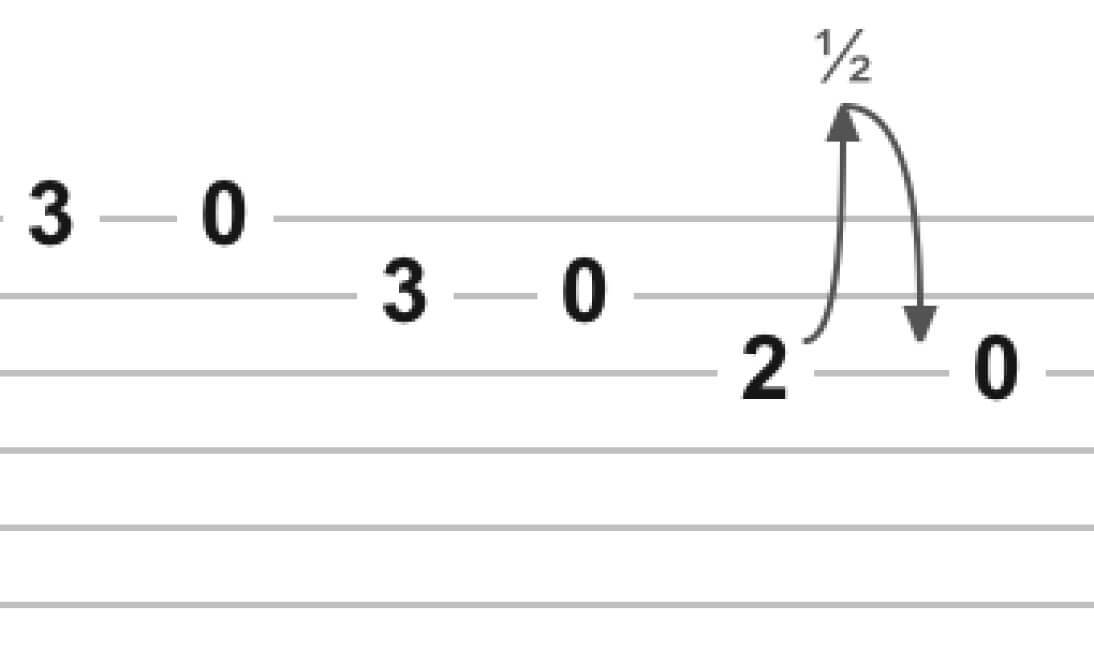
Bending is a powerful technique that adds expressiveness to solos. When applying bends within the minor pentatonic scale, the guitarist pushes or pulls the string, altering the pitch of the note. This technique allows for emotional expression, often capturing the essence of blues and rock solos. A typical example would be bending the 7th fret on the 3rd string (G string) up a whole step to reach the note that resides at the 9th fret, which is a significant interval in the scale.
Mastering bends involves practice and control to achieve the desired pitch accurately.
Sliding Techniques with the Scale
Sliding is another technique that can enhance the fluidity of the minor pentatonic scale. This technique involves moving from one note to another on the same string without lifting the finger off the fretboard. For instance, a slide can be executed from the 5th fret to the 7th fret on the 4th string (D string), creating a smooth transition between notes.Incorporating slides into a solo can result in a more dynamic and appealing sound, as it allows continuity between notes and can create a distinct vocal-like quality.
Hammer-Ons and Pull-Offs in the Minor Pentatonic Scale
Hammer-ons and pull-offs are two essential techniques that facilitate rapid note transitions while maintaining minimal movement of the picking hand. A hammer-on occurs when a player strikes a note and then ‘hammers’ down on a higher note on the same string, using a finger.Conversely, a pull-off involves playing a note and then pulling the finger off to let a lower note sound.
For example, a sequence could involve playing the 5th fret followed by a hammer-on to the 7th fret on the 2nd string (B string), and then a pull-off back to the 5th fret, creating an exciting rhythmic pattern.
Comparison of Techniques Incorporating the Minor Pentatonic Scale
A comprehensive understanding of various techniques provides guitarists with the tools to enhance their solos. Below is a table comparing the discussed techniques associated with the minor pentatonic scale:
| Technique | Description | Application |
|---|---|---|
| Finger Positioning | Correct placement of fingers on the fretboard for scale accuracy. | Facilitates smooth transitions between notes. |
| Bending | Altering pitch by pushing/pulling the string. | Expresses emotion and adds character to solos. |
| Sliding | Moving between notes on the same string without lifting fingers. | Creates a fluid sound and connects notes smoothly. |
| Hammer-Ons | Striking a note and hammering down on a higher note. | Allows rapid note transitions and rhythmic variety. |
| Pull-Offs | Playing a note and pulling off to let a lower note sound. | Enhances speed and articulation in playing. |
Creating Solos with the Minor Pentatonic Scale
The process of constructing solos using the minor pentatonic scale is both an art and a science. This scale, composed of five notes, offers a robust foundation for improvisation and melodic expression. By understanding how to navigate this scale effectively, musicians can develop engaging and memorable solos that resonate with their audience.To create a compelling solo using the minor pentatonic scale, it is essential to follow specific steps that guide the musician through the process of improvisation.
These steps not only facilitate creativity but also ensure that the resulting melodies are coherent and musically satisfying.
Steps to Construct a Solo
Begin by familiarizing yourself with the minor pentatonic scale in the key you are working within. Once you have a solid grasp of its notes, you can follow these organized steps to construct a solo:
1. Choose a Key and Backing Track
Select a minor key that resonates with you and find a suitable backing track. A strong harmonic foundation will enhance your improvisational endeavors.
2. Familiarize with Scale Positions
Learn various positions of the minor pentatonic scale across the fretboard. This knowledge allows you to access different notes and create movement within your solo.
3. Start Simple
Begin your solo with simple phrases. Focus on using a few notes from the scale to develop motifs that capture the listener’s attention.
4. Incorporate Rhythmic Variation
Experiment with different rhythms to make your phrases more interesting. Varying note lengths and incorporating rests can create tension and release.
5. Use Phrasing Techniques
Implement techniques such as slides, bends, and hammer-ons/pull-offs to add expression to your notes and enhance the emotional impact of your solo.
6. Develop Themes
As you play, develop themes by repeating and varying your initial phrases. This helps in creating a coherent narrative throughout your solo.
7. End on a Strong Note
Conclude your solo with a memorable phrase that resolves nicely to the tonic or a key note in the progression, leaving a lasting impression.
Improvisation Tips Over a Backing Track
When improvising over a backing track in a minor key, there are several strategies that can enhance your soloing experience. These tips are designed to help you navigate the minor pentatonic scale effectively:
Listen Actively
Pay attention to the chord changes and dynamics in the backing track. Responding musically to these changes will create a more cohesive performance.
Focus on Target Notes
Identify the chord tones within the backing track and aim to land on these notes at key moments in your solo. This will create a sense of resolution.
Create Call and Response
Develop a conversational quality in your solo by using call and response techniques. Play a phrase, then leave space for the backing track to “respond” before continuing.
Explore Different Octaves
Experiment with playing the scale in different octaves. This can add depth and variation to your solo, making it more engaging.
Common Phrasing Patterns
Several phrasing patterns work particularly well with the minor pentatonic scale. Incorporating these patterns into your solos can enhance their musicality and fluency:
Ascending and Descending Runs
Create fluid movements by ascending and descending the scale. This pattern can serve as an effective way to transition between phrases.
Syncopated Rhythms
Utilize syncopation to add interest to your phrases. Breaking the expected rhythmic patterns can capture the listener’s attention.
Trills and Grace Notes
Incorporate trills or quick grace notes to embellish your phrases. These techniques add flair and can enhance emotional expression.
Repeating Motifs
Repeat short melodic ideas with slight variations. This technique can help build tension and anticipation within your solo.By applying these steps and techniques, musicians can effectively harness the power of the minor pentatonic scale to create solos that are both expressive and memorable. The journey of improvisation becomes an exciting exploration of musical creativity.
Analyzing Famous Solos Using the Minor Pentatonic Scale
The minor pentatonic scale is a cornerstone in the world of music, particularly within the genres of rock, blues, and jazz. Many iconic solos have leveraged this scale to create memorable melodies and emotional expression. This analysis explores several classic solos that prominently feature the minor pentatonic scale, examining the distinctive approaches artists adopt in their improvisation and composition.
Classic Solos Featuring the Minor Pentatonic Scale
Numerous famous solos exemplify the beauty and versatility of the minor pentatonic scale. Below is a selection of notable examples that highlight how different musicians harness this scale’s potential to develop compelling solos.
| Artist | Song Title | Main Characteristics | Noteworthy Techniques |
|---|---|---|---|
| Jimi Hendrix | “Purple Haze” | Use of bends and slides to enhance expressiveness. | Incorporation of whammy bar for sustaining notes. |
| Eric Clapton | “Crossroads” | Fast-paced licks with a focus on call-and-response phrasing. | Use of double stops and varying dynamics. |
| Jimmy Page | “Whole Lotta Love” | Powerful riffs with a strong rhythmic base. | Incorporation of distortion and feedback for sonic impact. |
| B.B. King | “The Thrill is Gone” | Melodic phrasing with a focus on emotional delivery. | Usage of vibrato and slow bends to emphasize feeling. |
The artists listed above each bring their unique flair to the minor pentatonic scale. For instance, Jimi Hendrix’s innovative use of the whammy bar adds a layer of expressiveness, while Eric Clapton’s call-and-response licks demonstrate a conversational approach in his solos. Jimmy Page’s heavy use of distortion contrasts with B.B. King’s smooth vibrato, showcasing the diverse applications of the minor pentatonic scale.
“The minor pentatonic scale serves as a gateway for musicians to express their individuality and emotion through improvisation.”
By analyzing these iconic solos, one can appreciate not only the technical skills involved but also the inherent emotional depth that the minor pentatonic scale can convey. Each artist exemplifies how this scale can serve as a foundation for creativity and personal expression in music.
Common Mistakes When Using the Minor Pentatonic Scale
Improvisation using the minor pentatonic scale can be a transformative experience for musicians, yet it is not without its challenges. Many players, both novice and experienced, encounter pitfalls that can hinder their creativity and expression. Understanding these common mistakes is essential for any musician looking to improve their soloing skills and fully utilize the potential of the minor pentatonic scale.One frequent mistake is the over-reliance on the scale’s pattern, which can lead to predictable and monotonous solos.
Musicians may fall into a rut by playing the same phrases repeatedly, lacking variation and emotional depth. To avoid this pitfall, players are encouraged to experiment with different rhythms, phrasing, and techniques. Utilizing techniques like slides, hammer-ons, and pull-offs can add a dynamic quality to solos.
Overplaying and Lack of Dynamics
A common issue in improvisation is overplaying, where musicians tend to use excessive notes without regard for musicality. This can result in a cluttered sound that lacks clarity. To counteract this, it is essential to focus on dynamics and space. Here are some strategies to develop better dynamics in solos:
- Emphasize silence: Use rests strategically to create contrast and build tension in your playing.
- Vary your note lengths: Combine short and long notes to create a more engaging melodic line.
- Implement dynamics: Practice playing softly and loudly, and explore how volume changes can affect the emotional impact of your solos.
Another significant mistake is failing to listen to the backing track or other musicians. Improvisation is often a collaborative effort, and ignoring the harmonic and rhythmic context can lead to disjointed playing. Musicians should actively listen to the progression and adjust their phrasing accordingly. For example, a guitarist might adjust their notes to match the intensity of the drums or the mood of the bass line.
“Improvisation is not just about playing notes; it’s about responding to the musical conversation happening around you.”
Many musicians have learned from their mistakes when using the minor pentatonic scale. For instance, famed guitarist Eric Clapton has shared experiences of early performances where he relied heavily on familiar licks. It wasn’t until he began to incorporate more space and listen closely to the band that his solos gained the emotional resonance that defined his style. By recognizing these common pitfalls and implementing effective strategies, musicians can enhance their improvisational skills and create more compelling solos using the minor pentatonic scale.
Advanced Techniques and Concepts
The minor pentatonic scale is a robust tool for soloing, and exploring advanced techniques can significantly enhance a musician’s expressive capabilities. By integrating modes, chromatic notes, and passing tones, players can cultivate a richer melodic vocabulary that transcends basic improvisation. Mastering these concepts allows musicians to craft solos that resonate with emotional depth and technical sophistication.
Using Modes of the Minor Pentatonic Scale
Modes provide distinct tonal colors and emotional expressions, enriching the traditional minor pentatonic framework. The minor pentatonic scale contains five notes (1, b3, 4, 5, b7), which can be morphed into various modes by altering the starting note. For instance, starting on the b3 note yields the Dorian mode, which adds a major sixth to the scale. This shift introduces a more uplifting sound to the typically somber minor tonality.The following are common modes derived from the minor pentatonic scale:
- Dorian Mode: Start on the second degree of the scale, adding the major sixth.
- Phrygian Mode: Start on the third degree, incorporating a flat second.
- Aeolian Mode: Start on the fifth degree, emphasizing a natural minor feel.
Exploring these modes encourages players to express diverse emotions and adds dynamism to solos.
Incorporating Chromatic Notes and Passing Tones
Chromatic notes and passing tones serve as powerful tools for creating tension and resolution within a solo. By incorporating notes that do not belong to the scale, musicians can add intrigue and complexity to their phrasing. For instance, a passing tone can connect two scale notes, creating a smoother melodic transition.When utilizing chromatic notes, it’s vital to maintain a balance between tension and resolution.
Here are some key concepts:
- Chromatic Approach: Use chromatic notes to approach a target scale tone, enhancing the melodic contour.
- Enclosures: Surround a target note with notes from outside the scale, creating a sense of arrival.
- Grace Notes: Quickly play a chromatic note just before a target note to create a decorative effect.
These techniques enrich solos, providing an emotional journey that captivates listeners.
Expanding Melodic Vocabulary Using the Minor Pentatonic Scale
Broadening the melodic vocabulary can lead to more compelling and nuanced solos. Incorporating rhythmic variation, syncopation, and articulation can transform standard pentatonic runs into captivating musical statements. Here are strategies for expanding your melodic vocabulary:
- Rhythmic Variation: Experiment with different rhythmic patterns to create interest and complexity.
- Call and Response: Imitate a phrase and respond to it, creating a dialogue within the solo.
- Articulation Techniques: Utilize techniques like hammer-ons, pull-offs, and slides to add expressiveness.
These creative ideas encourage musicians to explore various facets of the minor pentatonic scale, fostering a unique personal style that stands out in solos.
“The use of advanced techniques can elevate your solos from simple melodies to intricate musical narratives.”
Practice Exercises for Mastery
Mastering the minor pentatonic scale requires consistent practice and a structured approach. Engaging in targeted exercises can significantly enhance your familiarity and fluency with the scale, enabling you to incorporate it effectively into your solos. This section Artikels a variety of exercises and a progressive practice routine designed to help you achieve mastery over the minor pentatonic scale.It is vital to not only play the scale but also to incorporate arpeggios and improvisation to develop a well-rounded skill set.
The following exercises are categorized by difficulty level, ensuring that players at various stages of their musical journey can benefit.
Exercise List for Mastery
The following list includes exercises that focus on different aspects of the minor pentatonic scale, from basic scale runs to more complex improvisational techniques.
- Basic Scale Exercise: Play the minor pentatonic scale ascending and descending in different positions on the fretboard.
- Arpeggio Exercise: Combine minor pentatonic notes with arpeggios of the corresponding minor chords.
- Interval Practice: Play intervals (thirds, fifths) using notes from the minor pentatonic scale to develop finger dexterity.
- Improvisation Exercise: Set a metronome to a slow tempo and improvise melodies using the minor pentatonic scale.
- Phrase Construction: Create small musical phrases using the notes of the minor pentatonic scale and repeat them with variations.
Progressive Practice Routine
Establishing a routine that progressively builds on skills is essential for effective practice. The following routine incorporates scales, arpeggios, and improvisation exercises, arranged from basic to more advanced levels.
1. Warm-Up (5-10 minutes)
Play the minor pentatonic scale in one position, focusing on even timing and finger placement.
2. Scales (10 minutes)
Move through all positions of the minor pentatonic scale, playing each position ascending and descending.
3. Arpeggios (10 minutes)
Integrate minor arpeggios related to the minor pentatonic scale, practicing them in conjunction with scale runs.
4. Improvisation (10-15 minutes)
Use a backing track or loop a simple chord progression. Improvise using the notes of the minor pentatonic scale, allowing yourself to experiment with phrasing and dynamics.
5. Cool Down (5 minutes)
Reflect on what you practiced. Play a simple melody or exercise that brings a sense of closure to your session.
Exercises Categorized by Difficulty Level
To facilitate a structured approach, the following table categorizes exercises based on difficulty, allowing musicians to choose exercises that match their current skill level.
| Difficulty Level | Exercise |
|---|---|
| Beginner | Basic Scale Exercise: Ascending and descending scale runs. |
| Intermediate | Arpeggio Exercise: Playing minor arpeggios in conjunction with the scale. |
| Advanced | Improvisation Exercise: Free-form improvisation over a backing track. |
“Regular practice of these exercises will not only enhance your technical abilities but also expand your creative expression within the context of the minor pentatonic scale.”
Concluding Remarks
In summary, mastering the minor pentatonic scale is invaluable for any aspiring soloist, enabling rich improvisation and creativity in performances. By recognizing common pitfalls and incorporating advanced techniques, one can elevate their musical expression and connect more deeply with their audience. Ultimately, the journey of using this scale will lead to greater musical proficiency and enjoyment.