How to Transpose a Song to a Different Key is a vital skill for musicians aiming to enhance their versatility and adapt their performances to various settings. Transposition allows artists to shift a piece of music into a different key, making it more suitable for their vocal range or instrumental capacity. This practice not only helps in accommodating different performers but also in exploring new creative avenues within familiar songs.
In today’s discussion, we will delve into the nuances of musical transposition, exploring the tools available, manual techniques, and specific methods for instruments like piano and guitar. Additionally, we will address how singers can adjust songs for their vocal ranges and the significance of key changes in composition. Understanding this process not only enriches a musician’s repertoire but also improves their overall musicianship.
Understanding Transposition
Transposition is a fundamental concept in music that involves shifting the pitch of a piece of music to a different key. This process allows musicians to adapt a song to better suit their vocal range or instrumental capabilities, ultimately enhancing the overall performance experience. Understanding how to transpose is essential for musicians of all levels, as it empowers them to explore various interpretations of a song.
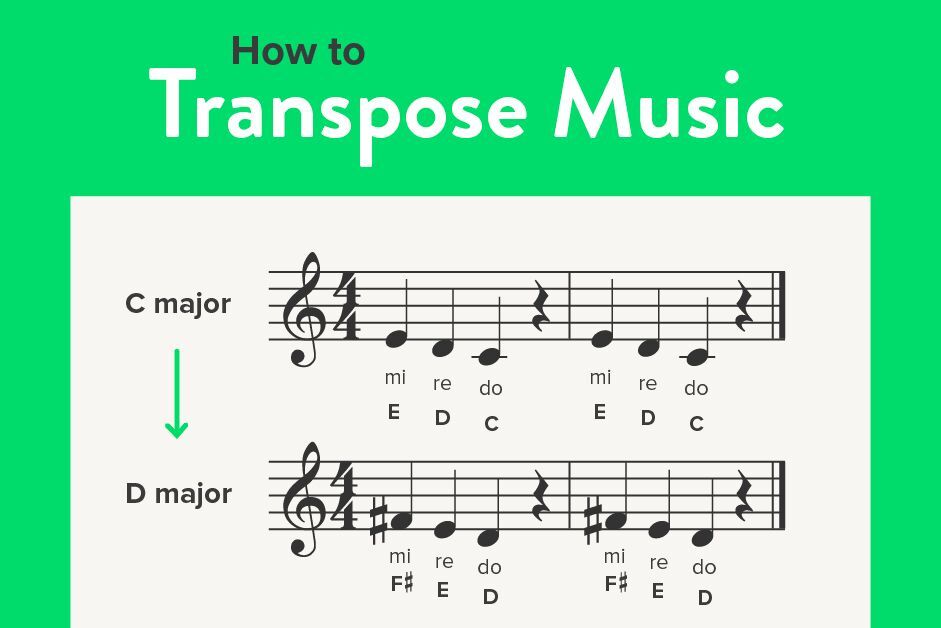
Musical transposition refers to the act of changing the key of a piece of music while maintaining the intervallic relationships between the notes. For instance, if a song originally in C major is transposed to D major, every note in the song is raised by a whole step. This method preserves the original melody and harmonies, allowing musicians to explore different tonalities without compromising the song’s essence.
Reasons for Transposing Songs
Transposing songs to different keys serves several important purposes in music practice and performance. Here are some key reasons why musicians may choose to transpose a piece of music:
- Vocal Range Adaptation: Different singers have varying vocal ranges. Transposing a song can help accommodate a singer’s specific range, allowing them to perform comfortably and effectively.
- Instrument Compatibility: Certain instruments are better suited to specific keys. For example, a piece may sound better on a guitar in a key compatible with open chords. Transposing ensures that musicians can play together harmoniously.
- Harmonic Exploration: Transposing can facilitate creative exploration of different harmonic contexts. Musicians might transpose a song to discover new sounds and arrangements that enhance their artistic expression.
Challenges Faced When Transposing Music
While transposition offers numerous benefits, it can also present challenges that musicians must navigate. Understanding these challenges is essential for effective transposition:
- Notation Complexity: Transposing music requires careful attention to the key signature and notation changes. Musicians must accurately translate notes into the new key, which can become complicated, particularly with complex arrangements.
- Instrument Limitations: Some instruments have specific tuning or range limitations that can affect the transposition process. For instance, a transposed key may not be playable on certain instruments without compromising sound quality.
- Memory and Performance Adjustments: Musicians may need to adjust their mental approach to the piece when performed in a different key. This can involve extra practice to ensure fluidity and confidence during performances.
“Transposing is not just a technical skill, but also a gateway to musical creativity and exploration.”
Tools for Transposing
Transposing a song to a different key can be facilitated by various tools and software designed specifically for this purpose. Utilizing the right tools not only makes the process easier but also enhances a musician’s ability to adapt pieces for different vocal ranges or instrumental capabilities. Below is a detailed description of several common tools and software that musicians can use to transpose songs effectively.
Common Tools and Software for Transposing
Numerous tools are available that serve to assist musicians with transposing songs. Understanding these tools can greatly enhance a musician’s adaptability and overall performance. Here are some popular transposing tools:
- Transposition Charts: These are printed or digital charts that display the equivalent notes in various keys. Musicians can reference these charts to quickly find the notes corresponding to the key they wish to transpose to. For example, moving a piece from C major to D major would require the musician to shift each note up a whole step.
- Transposing Apps: There are many mobile and desktop applications available that can instantly transpose music. These apps often allow users to input their music and select a new key, automatically generating the transposed version. Popular options include apps like “Chordify” and “Capo,” which provide user-friendly interfaces for quick transposition.
- Music Notation Software: Programs such as “Finale” or “Sibelius” offer comprehensive features for composing and arranging music. They allow for easy transposition of entire scores with just a few clicks, making them very useful for composers and arrangers alike. Users can select the entire piece and simply choose a new key, which the software will transpose automatically.
- Online Transposition Tools: Websites such as “Transpose” and “Chord Transposer” enable musicians to enter chords and lyrics and select a new key for instant transposition. These online tools are particularly helpful for songwriters looking to quickly change the key of a piece without needing software installation.
Using a Transposition Chart or App
Transposition charts and apps are invaluable resources that simplify the transposing process. A transposition chart typically provides a side-by-side comparison of notes across different keys, making it clear which notes correspond to one another. For example, when using a transposition chart, if a musician wants to move from G major to A major, they can easily see that G becomes A, A becomes B, and so forth.In contrast, using a transposing app involves entering the original chords or notes and selecting the desired new key.
The app then displays the transposed music, allowing musicians to play or sing in the new key with ease. The step-by-step process typically includes:
- Inputting the original chords or melody notes into the app.
- Selecting the key to which the musician wants to transpose.
- Reviewing the output for accuracy before performing or sharing.
“Transposing tools not only save time but also empower musicians to explore new musical possibilities.”
Manual Transposition Techniques

Transposing a song manually involves a systematic approach that incorporates music theory and practical application. Musicians often prefer manual transposition for its accuracy and deepening understanding of music structure. This method allows for greater flexibility, enabling one to transpose melodies or harmonies while considering the emotional and tonal qualities of the piece.
Step-by-Step Manual Transposition
To transpose music by hand, follow these essential steps:
1. Determine the Original Key
Identify the key signature of the piece you wish to transpose. This step is vital as it establishes the tonal foundation of the song.
2. Choose the New Key
Decide which key you want to transpose the song to. Understanding the relationship between the original and new keys will facilitate smoother transitions.
3. Identify Each Note
Write out the melody or chords using standard notation. This step allows you to visualize how each note corresponds to the original key.
4. Calculate Intervals
Use the interval difference between the original key and the new key. Each note’s transposition involves moving it up or down by a specific interval, which is integral to maintaining the song’s melodic contour.
5. Rewrite the Notes
Apply the calculated intervals to each note, adjusting the melody or chord accordingly. This rewrite requires careful attention to ensure that the new notes are correctly placed and represented in the new key.
6. Double-Check
Review your transposed melody or chords. Play through the new version to ensure it retains the song’s essence and flow.
Using Intervals to Transpose Melodies
Intervals serve as the foundation for transposing melodies, allowing musicians to maintain the song’s character while shifting pitch. An interval is defined as the distance between two pitches, and understanding these can simplify the transposition process.
To effectively transpose using intervals, follow these guidelines:
Identify the Interval
Determine the interval between the original key and the target key. For example, if you are transposing up a major third, this would involve moving each note up two whole steps.
Apply to Each Note
Take each note from the original melody and move it according to the identified interval. This ensures that the overall structure of the melody remains intact.
Reference for Common Intervals
Here is a helpful reference for common interval changes, which can streamline the transposition process:
| Interval Type | Distance |
|---|---|
| Minor Second | 1 half step |
| Major Second | 2 half steps |
| Minor Third | 3 half steps |
| Major Third | 4 half steps |
| Perfect Fourth | 5 half steps |
| Perfect Fifth | 7 half steps |
| Octave | 12 half steps |
Understanding these intervals will enable musicians to transpose melodies with confidence, ensuring that the integrity of the music is maintained throughout the process.
Piano Transposition
Transposing a song on the piano requires an understanding of musical keys and the physical adjustments needed to play in a different key. This section aims to provide piano players with effective strategies for transposing songs, focusing on finger positioning and note adjustments. By mastering these techniques, musicians can easily adapt their playing to suit different vocal ranges or instrumental arrangements.To transpose a song on the piano, it is essential to comprehend the key signatures involved and how to navigate them on the keyboard.
Each key comprises a unique set of notes, and players must adjust their finger positioning accordingly. Here are some key points to consider when transposing:
Finger Positioning and Note Adjustments
Proper finger positioning is crucial for smooth and accurate playing during transposition. When transposing a piece, the player must shift their hand to accommodate the new key while maintaining a comfortable and effective playing technique. The following guidelines help facilitate this process:
1. Identify the Original Key
Establish the key of the song you wish to transpose. For example, if the song is in C major, familiarize yourself with its scale: C, D, E, F, G, A, B.
2. Determine the New Key
Decide on the target key for the transposition. For instance, if moving to G major, the scale consists of G, A, B, C, D, E, F#.
3. Adjust Finger Placement
Shift your fingers to match the new notes. Each finger may need to be repositioned to play the corresponding notes of the new scale.
4. Practice the Scale
Before playing the entire song, practice the scale of the new key. This establishes muscle memory and helps with finger agility.
5. Utilize Chord Shapes
Many songs are built around chord progressions. Recognize the chord shapes in the original key and find their counterparts in the new key. For instance, a C major chord transposes to a G major chord.
6. Focus on Common Patterns
Identify recurring motifs or patterns within the song. Once transposed, playing these patterns in the new key will feel more natural.To illustrate the transposition process, consider the following examples of simple songs transposed into different keys:
“Twinkle, Twinkle, Little Star”
Original Key
C Major
Transposed Key
G Major
Adjusted Notes
C, C, G, G, A, A, G becomes G, G, D, D, E, E, D.
“Mary Had a Little Lamb”
Original Key
C Major
Transposed Key
D Major
Adjusted Notes
E, D, C, D, E, E, E becomes F#, E, D, E, F#, F#, F#.By applying these principles and practicing regularly, piano players can become adept at transposing songs efficiently and effectively, widening their musical repertoire and enhancing their performance capabilities.
Guitar Transposition
Transposing music for guitar can be a crucial skill for musicians who want to adapt songs to better suit their vocal range or the sound they desire. The process involves shifting the original chords to a new key while maintaining the harmonic structure of the song. This can enhance the overall performance and allow for greater versatility in playing.Transposing chords for guitarists primarily involves changing the chord shapes while remaining mindful of the relationships between the original chords.
Guitarists have the advantage of various tools that can simplify this process, including the use of a capo for quick transposition. Understanding how to effectively utilize these methods can greatly improve a musician’s adaptability during practice and performance.
Chord Transposition Process
The process of transposing chords requires a solid understanding of musical intervals and how they relate to the guitar fretboard. By knowing the original key, guitarists can determine the new key and adjust the chord shapes accordingly. The following table illustrates the original chord shapes alongside their transposed counterparts for common keys.
| Original Chord | Transposed Chord (Up a Whole Step) | Transposed Chord (Up a Half Step) |
|---|---|---|
| C | D | C# |
| G | A | G# |
| D | E | D# |
| A | B | A# |
| E | F# | F |
This table allows guitarists to quickly reference the original chords and their respective transposed shapes, facilitating fluidity in playing.The use of a capo offers guitarists an efficient way to transpose songs without having to adjust finger placements extensively. A capo can be placed on any fret, allowing the player to maintain familiar chord shapes while effectively raising the pitch of the entire guitar.
For instance, placing a capo on the second fret allows a guitarist to play shapes that are two semitones higher than the original key. This technique not only simplifies the transposition process but also can result in a fuller sound, as it leverages the resonant qualities of the guitar.
Utilizing a capo enables quick adjustments to key signatures while preserving the simplicity of familiar chord shapes.
By mastering the art of guitar transposition and the strategic use of a capo, musicians can enhance their performances and adapt songs to their unique styles and vocal ranges, making their playing more dynamic and enjoyable.
Vocal Transposition
Transposing songs for vocal performance is an essential skill that allows singers to adapt music to better suit their vocal ranges. This process not only enhances comfort while singing but also improves overall performance quality. By transposing songs, vocalists can ensure that melodies lie within their comfortable singing range, facilitating a more expressive delivery.To transpose songs effectively for different vocal ranges, it is important to understand the singer’s current range and the desired key.
The vocal range is defined by the lowest and highest notes that a singer can comfortably produce. When transposing, the goal is to shift the original key up or down to match the singer’s range. This can be achieved using various methods, including software, charts, or manual adjustments.
Techniques for Practicing Transposed Pieces
Practicing transposed pieces requires specific techniques to help singers adapt to the new key while maintaining vocal health and stability. Here are several effective methods to consider:
1. Consistent Vocal Warm-Ups
Begin each practice session with vocal warm-ups tailored to the new key. This prepares the voice for the altered range and builds familiarity with the notes.
2. Repetition of Transposed Sections
Focus on repeating challenging sections in the new key. This reinforces muscle memory and ease of transition between notes.
3. Use of Accompaniment
Whenever possible, practice with a piano, guitar, or backing track in the transposed key. This aids in developing a sense of pitch and support, making it easier to stay in tune.
4. Recording and Reviewing
Record practice sessions to evaluate progress. Listening back can reveal areas that need improvement, helping singers adjust their technique.
5. Collaboration with Vocal Coaches
Working with a vocal coach can provide valuable insights and personalized feedback. Coaches can offer strategies specific to the singer’s needs and vocal style.
Common Songs Transposed for Vocal Performance
Several popular songs are frequently transposed to accommodate various vocal ranges. These songs often serve as excellent practice material due to their familiarity and lyrical content. Here are examples of such songs:
“Someone Like You” by Adele
Originally in A major, this song is often transposed down to G major or F major for male vocalists or those with lower ranges.
“Let It Go” from Frozen
Typically performed in A-flat major, it can be transposed to G major or B-flat major to suit different vocalists.
“Hallelujah” by Leonard Cohen
This classic is often performed in C major, but transposing to D major or B major can make it more accessible for various singers.
“I Will Always Love You” by Whitney Houston
Commonly sung in A major, many singers transpose it to G major or F major for easier vocal execution.
“Rolling in the Deep” by Adele
Originally in C minor, this song can be transposed to B minor or D minor based on vocal preferences.By employing these techniques and utilizing well-known songs, singers can successfully navigate vocal transposition, enhancing their performance and vocal versatility.
Transposition in Composition
Incorporating transposition into original compositions can significantly enhance the musicality and emotional depth of a piece. This technique allows composers to explore different tonal colors and moods, providing listeners with varied auditory experiences. Understanding how to effectively utilize transposition can elevate a composition from simple to sophisticated, adding layers of complexity.Transposition not only facilitates the adaptation of a composition to suit different instruments or vocal ranges but also serves as a powerful tool for thematic development.
By shifting keys, composers can invoke different emotional responses and alter the overall atmosphere of their work. For instance, a piece in a minor key can acquire a more uplifting feel when transposed to a major key, while the reverse can impart a sense of melancholy.
Incorporating Transposition into Original Works
To effectively incorporate transposition into original compositions, composers should consider the following strategies:
1. Thematic Variation
Use transposition to present a theme in different keys throughout the piece. This maintains listener interest and highlights the versatility of the material.
2. Dynamic Contrast
Shift keys at pivotal moments in the composition to create dramatic effects. For example, modulating to a new key for a chorus or bridge can elevate the energy level and engage the audience.
3. Exploring Mood
Experiment with different key signatures to evoke various emotions. A transition from E minor to G major can transform a somber passage into a more hopeful one, illustrating the emotional power of key changes.
4. Instrumental Adaptation
Consider the range and timbre of the instruments involved. Transposing a piece to better suit the capabilities of the musicians can enhance the performance quality and ensure that the composition is fully realized.
5. Harmonic Exploration
Utilize transposition to explore alternative harmonic structures. By moving to related keys, composers can discover fresh progressions and textures that may not be available in the original key.
The effective use of transposition can lead to unexpected discoveries in composition, pushing the boundaries of creativity.
Impact of Key Changes on Mood
Key changes play a crucial role in shaping the emotional landscape of a composition. The following points highlight how different keys can influence mood:
Major Keys
Often associated with brightness and joy, major keys can create a sense of optimism and exuberance. For instance, compositions in C major often convey a sense of clarity and resolution.
Minor Keys
These keys tend to evoke feelings of sadness or introspection. For example, a piece in A minor can create a haunting or reflective atmosphere that resonates deeply with listeners.
Modal Interchanges
Utilizing modes (such as Dorian or Phrygian) through transposition can introduce unique emotional qualities. Compositions that switch between major and minor modes can create tension and release, heightening emotional impact.
Unexpected Modulations
Sudden key changes can surprise listeners and shift their emotional response instantaneously. This technique is often used in film scores to reflect changes in narrative tension or character emotion.
Famous Compositions Utilizing Transposition
Numerous acclaimed compositions effectively demonstrate the power of transposition. Some noteworthy examples include:
“Pachelbel’s Canon in D”
This piece has been transposed into various keys for different ensembles, showcasing its adaptability and timeless appeal.
“Bohemian Rhapsody” by Queen
The song features dramatic key changes that amplify its narrative arc, shifting from reflective passages to powerful, climactic moments.
“Clair de Lune” by Debussy
Debussy employs subtle transpositions to enhance the piece’s ethereal quality, transitioning between keys to evoke a dreamlike atmosphere.
“Symphony No. 5” by Beethoven
The famous four-note motif is transposed and developed throughout the symphony, illustrating the theme’s versatility and emotional depth.These examples demonstrate how transposition can transform a composition, enriching its emotional palette and inviting listeners on a journey through sound.
Common Mistakes in Transposition
Transposing music is a valuable skill for musicians, enabling them to perform pieces in different keys that suit their voice or instrument. However, the process can be fraught with potential errors that may lead to confusion or performance issues. Recognizing these common pitfalls is crucial for successful transposition, ensuring that musicians can adapt pieces seamlessly while maintaining their integrity.One frequent mistake musicians make during transposition is neglecting to account for the interval changes accurately.
This oversight can result in playing the wrong notes or chords, leading to a sound that is not only incorrect but also jarring. Additionally, musicians often either forget to transpose every part of the music or miscalculate the key signature, which can create dissonance, particularly in ensemble settings.
Frequent Errors in Transposition
Understanding the mistakes that can arise in transposition can help musicians navigate the process more effectively. Below are several common errors, along with tips for avoiding them:
- Skipping the Key Signature Change: When transposing, it is essential to adjust the key signature accordingly. Failing to do so can lead to playing in the wrong tonal center.
- Incorrect Interval Calculation: Musicians sometimes miscalculate the interval required for transposition. For example, a piece moved up a whole step must shift every note two half-steps up. Double-checking interval calculations can prevent this mistake.
- Overlooking Accidentals: Accidentals in the original key must also be transposed. Ignoring them can create unexpected notes that disrupt harmony.
- Misreading the Original Score: Sometimes, musicians misinterpret the original score due to a hurried reading. Taking time to understand the piece thoroughly can prevent errors in transposition.
- Ignoring Instrument Differences: Each instrument has unique transposition requirements. For example, B-flat instruments sound a whole step lower than written. Musicians should be aware of their instrument’s characteristics when transposing.
Many musicians learn these lessons through experience. For instance, a pianist might recall a performance where they transposed a piece for a vocalist but failed to adjust the key signature. This oversight led to a performance that was not only awkward but also embarrassing. Such experiences highlight the importance of careful preparation and validation of transposition.In another case, a guitarist attempted to transpose a song for a group of friends but neglected to account for the different tuning of their guitars.
When playing together, the harmonic discrepancies became evident, showcasing the necessity of understanding both individual and collective instrument requirements during transposition.
“Mastering the art of transposition requires not only skill but also a keen awareness of the many nuances involved.”
Summary

In conclusion, mastering How to Transpose a Song to a Different Key is essential for any musician looking to broaden their expressive capabilities and connect with diverse audiences. By utilizing various tools and techniques discussed, musicians can confidently navigate the challenges of transposition. Ultimately, this skill not only fosters creativity but also enhances collaboration among musicians, allowing for more dynamic and engaging performances.