How to Palm Mute for a Percussive Chunky Sound is a skill that many guitarists aspire to master. This technique offers a unique approach to achieving a distinct auditory impact, enabling musicians to create rhythms that are both vibrant and powerful. By understanding the mechanics of palm muting, players can significantly enhance their tonal variety and dynamic control, making their performances more engaging and expressive.
This exploration of palm muting will cover its essential techniques, the necessary equipment, and offer exercises aimed at improving your skill set. Whether you are a beginner or an advanced player, mastering palm muting can elevate your playing and open new avenues for creativity in your music.
Introduction to Palm Muting

Palm muting is a fundamental technique used in guitar playing that involves resting the edge of the picking hand on the strings near the bridge while strumming or picking. This technique effectively dampens the strings, producing a muted sound that contrasts sharply with open notes. Palm muting is particularly significant in genres such as rock, metal, and funk, where a percussive and chunky sound is desired.
The impact of palm muting on tone and dynamics is profound. When executed correctly, it creates a sharp, staccato effect that enhances rhythm and adds depth to the overall musical composition. The combination of muted and open notes can introduce a dynamic range that elevates the performance, allowing for greater expressive capability. For instance, palm muting can transform a straightforward power chord into a powerful rhythmic statement, setting the stage for more intricate musical ideas.
Effects of Palm Muting on Tone and Dynamics
The effects of palm muting can be categorized into several key aspects that highlight its importance in guitar performance. Understanding these effects allows musicians to utilize palm muting to its fullest potential.
- Reduced Sustain: The technique inherently limits the sustain of the notes, which is ideal for creating a more aggressive sound. This characteristic is especially beneficial in fast-paced genres where clarity is essential.
- Articulation of Rhythm: Palm muting allows for precise articulation of rhythm. By controlling how much of the string vibration is allowed to resonate, guitarists can achieve a unique percussive feel.
- Dynamic Control: The degree of muting can be varied to produce different dynamics, from subtle nuances to heavy, driving rhythms. This control enables musicians to adapt their playing style to the mood of the music.
- Textural Contrast: Alternating between muted and open notes introduces a textural contrast that enhances musical interest. This interplay keeps the listener engaged and adds complexity to the performance.
“Palm muting transforms your guitar into a rhythmic instrument, allowing for a unique expression in your musical journey.”
Techniques for Palm Muting

Palm muting is a vital technique that enhances the percussive quality of guitar playing across various music genres. Mastering palm muting requires understanding the foundational hand positioning, finger placements, and strumming techniques to achieve a chunky sound. This technique not only adds depth to the music but also enables guitarists to create distinctive rhythms that are characteristic of many styles.Hand positioning is crucial for effective palm muting.
The palm of the picking hand must lightly rest on the strings near the bridge of the guitar. This positioning allows for a muted tone while still enabling the strings to vibrate. Finding the right balance between pressure and placement is essential. If the hand is placed too far from the bridge, the muting effect diminishes, while excessive pressure may completely silence the strings.
Proper Hand Positioning
Achieving the correct hand positioning involves several key steps:
- Place the heel of your palm near the bridge of the guitar, ensuring it contacts the strings gently.
- Keep your fingers relaxed and allow them to follow the natural curve of your hand to maintain flexibility.
- Experiment with the distance from the bridge to find the sweet spot that produces the desired muted sound.
This technique is adaptable across different styles, providing a unique texture in various musical contexts.
Styles of Palm Muting
Different genres utilize palm muting in distinctive ways, contributing to their unique soundscapes. Understanding these variations enhances the versatility of a guitarist. Some notable styles include:
- In rock and metal, palm muting is often employed on low E and A strings, creating a powerful, chugging sound that drives the rhythm.
- In funk, the technique is used with percussive strumming to create sharp, staccato rhythms that complement the groove.
- In reggae, palm muting on the off-beats contributes to a laid-back, syncopated feel that is essential to the genre.
By exploring these styles, guitarists can integrate palm muting into their playing, enriching their overall sound.
Finger Placements and Strumming Techniques
The way fingers are positioned and how they interact with the strings significantly impacts the effectiveness of palm muting. Use the following techniques for enhanced sound:
- Using a pick can provide a clearer, more defined sound; experiment with varying grip pressure for different tonal qualities.
- For fingerstyle playing, allow your thumb to control the bass notes while muting with the palm for a more complex texture.
- Incorporate strumming patterns that alternate between muted and open strings to create dynamic rhythms.
These approaches, when combined with proper hand positioning and an understanding of different styles, will elevate your palm muting technique to new levels.
Equipment Needed
Achieving a percussive and chunky sound through palm muting is significantly influenced by the equipment used. Selecting the right guitar, amplifier, and effects pedals can enhance your ability to produce this sound effectively. This section will detail the specific guitars, pickups, amplifiers, effects pedals, and string gauges that are particularly suited for palm muting.
Suitable Guitars and Pickups
The choice of guitar and pickups plays a crucial role in obtaining a powerful, muted sound. Certain models are renowned for their ability to deliver a punchy tone when palm muting. Here are several recommendations:
- Gibson Les Paul – Known for its thick, creamy sound, this guitar’s humbucker pickups excel at palm muting.
- Fender Stratocaster – While primarily associated with brighter tones, its single-coil pickups can produce a sharp, defined muted sound.
- Ibanez RG Series – Feature powerful humbuckers that provide clarity and sustain, ideal for aggressive palm muting.
- PRS Custom 24 – This guitar offers versatility and a rich harmonic content that enhances the palm muting effect.
Amplifiers and Effects Pedals
The amplifier and effects you pair with your guitar are vital to create the desired percussive sound. Below are key considerations when selecting amplifiers and pedals for palm muting:
- Tube Amplifiers – Models like the Marshall JCM800 and Fender Hot Rod Deluxe are celebrated for their warm tone and responsiveness, making palm muting more expressive.
- Overdrive Pedals – Pedals such as the Tube Screamer or Boss DS-1 can add grit and sustain, enhancing the punch of palm muting.
- Compression Pedals – Compressors like the MXR Dyna Comp can help level out dynamics, leading to a more consistent palm muting sound.
- Delay and Reverb – Subtle effects can add depth to palm-muted notes; pedals like the Boss DD-7 or TC Electronic Hall of Fame are excellent choices.
String Gauges and Materials
The choice of string gauge and material greatly affects the tone produced during palm muting. Selecting the right strings can enhance the overall sound and playability. Consider the following:
- Gauges – Heavier gauge strings (like .011 or .012) can provide a fuller sound and improved projection during muted playing.
- Material – Nickel-wound strings tend to offer a warm tone, while stainless steel strings provide brighter, sharper sounds that may suit aggressive palm muting.
- Coated Strings – Brands such as Elixir or D’Addario offer coated strings that can enhance durability and maintain brightness, crucial for extended playing sessions.
Selecting the right combination of guitar, amplifier, effects, and strings is essential for achieving a powerful palm-muted sound, allowing for greater expression and dynamic range in your playing.
Exercises to Master Palm Muting
Developing proficiency in palm muting is essential for achieving the desired percussive and chunky sound in various musical styles. By practicing a series of structured exercises, musicians can enhance their technique and gain confidence in incorporating palm muting into their playing.To effectively master palm muting, it is important to follow a progressive difficulty scale. This approach allows for gradual improvement, ensuring that each exercise builds on the skills acquired in the previous ones.
The following exercises will guide you through this progression, emphasizing the importance of precision and dynamics.
Progressive Exercises for Palm Muting
The following exercises are designed to help you develop your palm muting skills, starting from basic to more advanced techniques. Each exercise focuses on different aspects of palm muting, including timing, rhythm, and integration with chords.
- Basic Palm Muting Exercise: Begin with an open E string. Use the edge of your palm to lightly rest on the string while plucking it. Focus on creating a muted sound. Repeat this for 4 measures, then switch to the A string.
- Single Notes Exercise: Select a simple melody, such as “Smoke on the Water.” Play the notes while incorporating palm muting on every other note, emphasizing the contrast between muted and open sounds. This will develop your timing and rhythm.
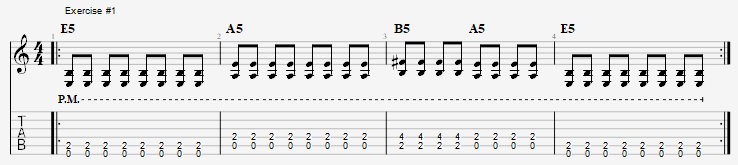
- Power Chord Exercise: Practice power chords (e.g., E5, A5) while applying palm muting. Start by playing the chords without muting, then gradually introduce palm muting. Focus on achieving a consistent muted sound while maintaining chord clarity.
- Rhythmic Chugging Exercise: Choose a simple rhythm pattern and apply palm muting to each stroke. For example, try a down-up strumming pattern using palm muting on all downstrokes. This exercise helps develop your sense of timing and rhythm.
- Chord Progression Integration: Select a common chord progression, such as G-C-D-Em. Play the chords using palm muting on the downstrokes and releasing the mute on the upstrokes. This exercise teaches how to seamlessly integrate palm muting into standard chord progressions.
“Practicing palm muting with various exercises not only improves technical skill but also enhances musical expression.”
Incorporating palm muting into standard chord progressions allows for greater rhythmic complexity and adds a unique texture to your playing. Experiment with different progressions and rhythms, adjusting the placement of muted and open notes to create dynamic variations in sound. By consistently practicing these exercises, musicians can successfully master palm muting and enrich their overall playing style.
Common Mistakes and Solutions
When learning to palm mute, musicians often encounter specific challenges that can hinder their progress. Recognizing and addressing these common mistakes is essential for developing a refined technique that enhances musical expression. This section will highlight frequent errors and provide actionable solutions to help you achieve a percussive, chunky sound effectively.
Frequent Errors in Palm Muting
Many players struggle with palm muting due to a few common mistakes. Understanding these errors is crucial for improvement. Below are the most frequent issues observed among guitarists attempting to master palm muting:
- Incorrect Hand Positioning: Players may place their palm too far back or too far forward on the strings, leading to inconsistent muting sounds.
- Excessive Force: Applying too much pressure can dampen the strings excessively, resulting in a dull sound instead of the desired percussive effect.
- Inconsistent Muting: Failing to maintain a steady muting technique while strumming can lead to unpredictable tonal variations.
- Lack of Rhythm: Inadequate attention to timing can disrupt the rhythmic quality that palm muting is meant to enhance.
- Ignoring String Dynamics: Not adjusting the muting pressure based on string gauge and type can lead to an unbalanced sound.
Actionable Tips for Correction
To correct these common mistakes, implementing specific strategies is essential for establishing strong palm muting skills. Here are effective tips to assist you in refining your technique:
- Adjust Hand Position: Experiment with the positioning of your palm on the strings to find the sweet spot that produces the best sound. The ideal location is typically right above the bridge.
- Control Pressure: Focus on applying just enough pressure with your palm to achieve a muted sound without choking the notes. This can be achieved through deliberate practice.
- Practice Consistency: Use a metronome while practicing to ensure that your muting remains consistent and in time with the music.
- Develop Rhythmic Precision: Incorporate palm muting into rhythmic exercises to build awareness of timing and dynamics, enhancing your overall playing style.
- Experiment with String Types: Try various string gauges and brands to determine which combinations yield the best results for your palm muting technique.
Importance of Practice Techniques
Establishing proper practice techniques is fundamental to avoiding bad habits that can arise during the learning process. Dedicated practice can help solidify good habits and reinforce effective palm muting techniques. Here are some key points to consider:
- Slow Practice: Begin practicing palm muting at a slower tempo to focus on precision and control before gradually increasing speed.
- Video Analysis: Record your playing to analyze your technique and identify areas that require improvement. This can offer valuable insights into your hand positioning and muting effectiveness.
- Regular Feedback: Seek feedback from instructors or peers to gain perspective on your technique and identify any unnoticed mistakes.
- Repetition: Consistent repetition of exercises will help reinforce muscle memory and embed the correct palm muting technique into your playing.
“Practice does not make perfect. Only perfect practice makes perfect.” – Vince Lombardi
By addressing these common mistakes and employing effective practice strategies, you can significantly improve your palm muting technique and achieve the chunky sound characteristic of rhythmic playing.
Incorporating Palm Muting into Songs

Palm muting is a powerful technique that can enhance the rhythmic and percussive quality of music across various genres. By incorporating palm muting into your playing, you can create a chunky sound that adds depth and texture to your performances. This technique is not only popular in rock and metal but also finds its place in acoustic and pop music, making it a versatile skill for any guitarist.To effectively utilize palm muting in your playing, understanding how it integrates into different songs is essential.
Below, we will explore a selection of popular songs that showcase palm muting, provide a detailed guide on playing one of these songs, and discuss how to arrange your original compositions with this technique.
Popular Songs That Utilize Palm Muting
Many songs across various genres utilize palm muting to create a distinct sound. Here is a list of notable tracks that effectively incorporate this technique:
- “Enter Sandman” by Metallica
- “Smells Like Teen Spirit” by Nirvana
- “Layla” (Unplugged) by Eric Clapton
- “Seven Nation Army” by The White Stripes
- “Killing in the Name” by Rage Against the Machine
- “Boulevard of Broken Dreams” by Green Day
- “Back in Black” by AC/DC
- “Walk” by Pantera
These songs demonstrate how palm muting can create a heavier, more punchy sound that complements the overall composition.
Step-by-Step Guide to Playing a Song Using Palm Muting
To illustrate how palm muting can be effectively utilized, let’s break down the iconic intro riff of “Enter Sandman” by Metallica. Follow these steps to master the riff with palm muting. Tune your guitar to standard E tuning (E A D G B e).
2. Fret the chord
The riff primarily involves power chords. Start with the E5 chord played at the second fret.
3. Position your palm
Place the side of your picking hand lightly on the strings near the bridge to achieve the muted sound.
4. Pick the strings
Use a downstroke with your pick to strike the strings while maintaining palm pressure for muting.
5. Add the notes
Follow the progression of the notes, which generally moves from E5 to F5 and G5, applying palm muting consistently on each strike.
6. Practice the rhythm
Focus on the timing and rhythmic pattern, ensuring that the muted strikes are clear and percussive. By continually practicing this riff, you will not only gain proficiency in palm muting but also strengthen your overall playing technique.
Arranging Original Music Compositions Featuring Palm Muting
When composing original music, incorporating palm muting can enhance your arrangements significantly. Here are some strategies to consider:
Identify the Genre
Determine the style of music you are creating. Palm muting is particularly effective in rock, metal, and funk genres, but can also add depth to acoustic pieces.
Establish a Groove
Start with a rhythmic foundation using palm muting to create a strong groove. This will serve as the backbone of your composition.
Layer with Melodies
Once you have a solid rhythm, layer melodies over the palm-muted sections. This contrast can draw attention to both elements.
Experiment with Dynamics
Vary the intensity of your palm muting throughout the piece. Use lighter muting for softer sections and more aggressive muting for high-energy parts.
Incorporate Different Chord Progressions
Explore various chord progressions while maintaining the palm muting technique to develop an engaging composition.By applying these strategies, you can successfully arrange original music that highlights the unique characteristics of palm muting, leading to a more dynamic and captivating sound.
Advanced Techniques and Variations
Exploring advanced techniques and variations in palm muting can significantly enhance a guitarist’s sound palette. These methods not only add depth but also introduce unique textures that can elevate a performance. Among these advanced techniques, hybrid picking stands out as a powerful tool for creating distinct sounds while maintaining the articulate nature of palm muting.
Traditional palm muting imparts a muted, percussive quality to the sound, primarily achieved using the palm of the hand resting on the strings. In contrast, other muting styles, such as finger muting and pick muting, provide different tonal characteristics and expressive capabilities. Understanding these differences allows musicians to choose the appropriate muting technique based on the desired effect.
Hybrid Picking
Hybrid picking combines the use of a pick and fingers to pluck the strings, allowing for intricate melodies and rhythmic patterns. This technique is particularly effective when paired with palm muting, as it provides both clarity and a chunky sound. The following points highlight the importance and application of hybrid picking in conjunction with palm muting:
- Enhanced Melodic Lines: By using the pick for the lower strings and fingers for higher strings, musicians can create melodic lines that stand out even when palm muting is applied.
- Rhythmic Variation: Hybrid picking allows for varied attack on the strings, which can lead to interesting rhythmic patterns that complement palm-muted sections.
- Dynamic Control: The combination of hybrid picking and palm muting grants players the ability to control dynamics, creating softer passages or more aggressive accents as required.
Incorporating palm muting into fingerstyle playing also opens up new creative avenues. This technique allows guitarists to play complex pieces that integrate both plucked notes and muted strumming. For example, a fingerstyle guitarist can mute bass notes while allowing melody notes to ring clearly, achieving a rich and engaging sound.
Combining palm muting with fingerstyle techniques can lead to unique textural contrasts and expressive musical phrases.
By exploring these advanced techniques and variations of palm muting, guitarists can greatly expand their musical vocabulary and enhance their overall performance quality. This understanding not only enriches their playing style but also provides new ways to engage and captivate their audience.
Analyzing the Sound
Understanding the tonal qualities of palm muting is essential for achieving the desired sound in both practice and performance. The assessment of these qualities varies depending on the musical setting, genre, and the player’s technique. By analyzing the nuances of palm muting, musicians can better incorporate this technique into their overall sound palette, enhancing the dynamics of their compositions.The relationship between palm muting and song dynamics is crucial; it allows musicians to create contrast and texture within their pieces.
The impact of palm muting can range from providing a subtle percussive feel to significantly altering the intensity of a passage. By varying the palm muting technique, players can manipulate the energy levels throughout a song, thus engaging the listener more effectively.
Sound Characteristics of Palm Muting Techniques
To better understand the different palm muting techniques and their sound characteristics, the following table summarizes various methods and their respective tonal qualities. This comparison is vital for musicians looking to choose the right technique for a specific musical context.
| Technique | Tonal Quality | Dynamic Range | Recommended Use |
|---|---|---|---|
| Light Palm Muting | Slightly muted, warm | Soft to medium | Acoustic settings, softer passages |
| Moderate Palm Muting | Chunky, defined | Medium to loud | Rhythm parts, driving sections |
| Heavy Palm Muting | Thick, percussive | Loud | Metal, hard rock, aggressive riffs |
| Chugging | Sharp, aggressive | Varied | Fast-paced music, breakdowns |
“The choice of palm muting technique directly influences the emotional impact of the music.”
Conclusion
In conclusion, mastering how to palm mute for a percussive chunky sound is not only about technique but also about creativity and expression in your music. As you practice these skills and incorporate them into your playing, you will discover new rhythmic possibilities that enhance your overall sound. Remember, like any skill, regular practice and a willingness to experiment will lead you to greater proficiency and enjoyment in your musical journey.