How to Clean and Maintain Your Guitar is essential for any musician aiming to preserve their instrument’s quality and performance. Regular maintenance not only enhances the lifespan of your guitar but also ensures optimal sound quality, making it a vital practice for both amateur and professional players alike. Understanding the significance of proper care can prevent common issues that arise from neglect, thereby improving playability and overall enjoyment of your musical craft.
In this guide, we will explore the necessary supplies, cleaning processes, and maintenance routines that will keep your guitar in top shape. From selecting the right cleaning solutions to understanding string maintenance, this comprehensive overview covers everything you need to know for effective guitar care.
Importance of Guitar Maintenance

Regular maintenance of a guitar is essential for ensuring its longevity and optimal sound quality. Just like any musical instrument, a guitar requires consistent care and attention to remain in top condition. Proper maintenance not only preserves the aesthetic appeal of the instrument but also enhances its overall performance, allowing musicians to enjoy a better playing experience. Neglecting guitar care can lead to a variety of common issues that may significantly impede its functionality.
For instance, dirt and grime can accumulate on the strings and fretboard, leading to a dampened sound and decreased playability. Additionally, changes in humidity and temperature can cause wood to warp or crack, which can result in costly repairs. By regularly maintaining a guitar, players can prevent such problems and ensure their instrument remains reliable and enjoyable to use.
Common Issues from Neglecting Guitar Care
Failure to maintain a guitar can result in several detrimental effects that impact both its aesthetics and performance. Understanding these issues emphasizes the importance of regular upkeep. Regular cleaning and maintenance can prevent the following issues:
- Corrosion of Strings: Accumulation of sweat, oils, and dirt can lead to string corrosion, resulting in a dull sound and shortened string lifespan.
- Fret Wear: Continuous playing without proper cleaning can wear down the frets, causing buzzing sounds and affecting intonation.
- Wood Damage: Exposure to humidity and temperature fluctuations can cause the wood to expand or contract, leading to cracks and warping.
- Loose Hardware: Neglect can result in screws and hardware becoming loose, affecting tuning stability and playability.
- Electronics Issues: For electric guitars, dust and debris can accumulate in the pickup areas and pots, leading to noise and reduced functionality.
The importance of maintaining a guitar cannot be overstated as it has a direct impact on playability and performance. A well-maintained instrument offers more accurate tuning, better sound projection, and a more enjoyable playing experience. Musicians who prioritize maintenance often find themselves playing more confidently and creatively, as they can rely on their instrument to perform consistently.
“An instrument that is cared for with diligence will reward its player with a sound that resonates deeply.”
Essential Cleaning Supplies

Maintaining the pristine condition of your guitar requires not only dedication but also the right cleaning supplies. These tools and products are essential for effective cleaning and maintenance, ensuring that your instrument remains in optimal playing condition and retains its aesthetic appeal. Understanding what to use is crucial for various guitar types, as different materials and finishes necessitate specific care products.When selecting cleaning supplies, it is important to consider the type of guitar you own as well as the materials used in its construction.
Different cleaning solutions cater to different finishes, such as glossy, matte, or satin. Here are essential tools and products that every guitarist should have in their maintenance toolkit:
Cleaning Tools and Products
A well-equipped cleaning toolkit includes multiple items that serve specific purposes in maintaining your guitar.
- Microfiber Cloth: A non-abrasive cloth is ideal for wiping down the body and strings of the guitar without scratching the surface.
- String Cleaner: This product helps to remove dirt and oils from the strings, prolonging their lifespan and enhancing tonal quality.
- Fretboard Oil: Designed for use on unfinished or rosewood fretboards, this oil nourishes the wood while removing grime.
- Polish: Guitar polish is available in various formulas, specifically designed for different finishes. It can restore shine and protect the surface.
- Cleaning Solution: Use a gentle, pH-balanced cleaner for painted finishes, while lacquer-based solutions are more suitable for nitrocellulose finishes.
- Soft Brushes: A soft-bristled brush can help clean hard-to-reach areas, such as between the strings or around hardware.
- Case Humidifier: Maintaining proper humidity levels in your guitar case is essential, particularly for wooden instruments, to prevent warping and cracking.
Considering the various cleaning solutions available on the market, it is essential to choose the right one based on your guitar’s finish. For example, a glossy finish may benefit from a wax-based polish that adds a protective layer, while a matte finish requires a cleaner that does not leave residue. Additionally, a specialized fretboard cleaner will address the unique needs of different woods used in fretboards, preventing damage and promoting longevity.
Choosing High-Quality Cleaning Supplies
Selecting high-quality cleaning supplies is fundamental for preserving the integrity of your guitar. Investing in reputable brands known for their effectiveness ensures that you are not inadvertently using abrasive or harmful products.Key considerations when choosing cleaning supplies include:
- Read Reviews: Look for products with positive reviews from other musicians and professionals, which can provide insights into effectiveness and safety.
- Check Ingredients: Avoid harsh chemicals that can damage finishes. Opt for natural or biodegradable options that are gentle yet effective.
- Brand Reputation: Established brands in the guitar maintenance industry often provide guarantees and are tested by professionals, ensuring quality.
- Suitability: Ensure that the product is formulated specifically for the type of finish your guitar has, as using the wrong cleaner can damage the surface.
By carefully selecting your cleaning tools and solutions, you can maintain your guitar’s appearance and functionality, ensuring a pleasurable playing experience for years to come.
Step-by-Step Cleaning Process

Maintaining the cleanliness of your guitar is essential for its longevity and performance. A regular cleaning routine not only enhances the aesthetic appeal of the instrument but also ensures optimal sound quality and playability. This section will guide you through a detailed cleaning process tailored for both acoustic and electric guitars, ensuring each part of your instrument receives the attention it deserves.
Cleaning Process for Acoustic Guitars
Cleaning an acoustic guitar involves specific steps to ensure the body, neck, and fretboard are properly maintained. Use the following detailed procedure for effective cleaning:
1. Gather Your Supplies
Before starting, ensure you have the necessary tools:
Soft cotton cloths
Guitar polish (for body)
Lemon oil (for fretboard)
String cleaner (optional)
Soft brush (to remove debris)
2. Prepare the Guitar
Place the guitar on a stable surface, preferably on a soft cloth to avoid scratches.
3. Clean the Body
Use a clean, dry cotton cloth to wipe down the entire body of the guitar, removing dust and fingerprints.
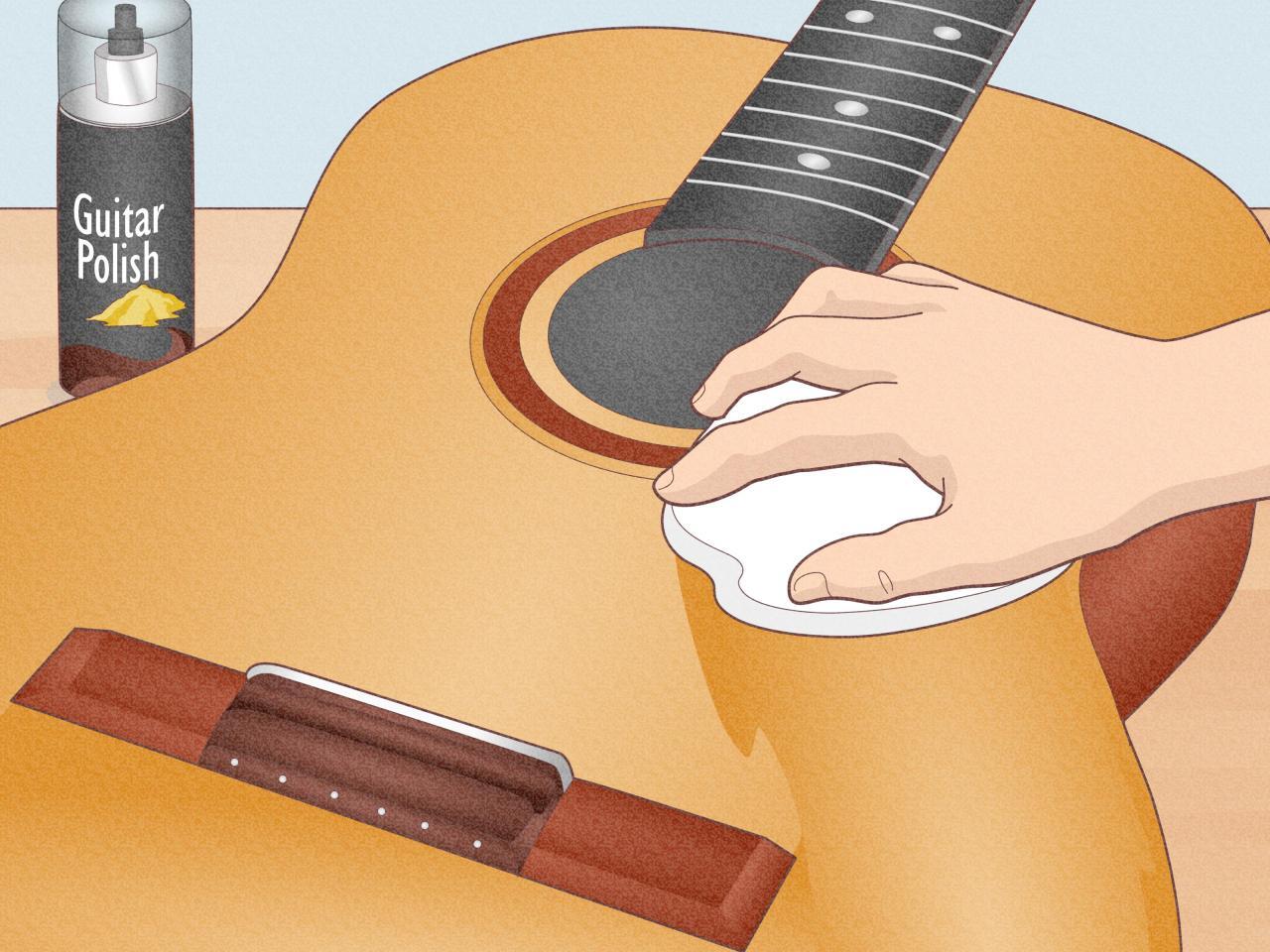
For stuck-on grime, apply a small amount of guitar polish to a separate cloth and gently buff the surface, following the grain of the wood.
4. Clean the Neck
Wipe the neck with a dry cloth to remove any dirt or oil buildup. Pay special attention to the area where your hand frequently rests. If needed, use a small amount of lemon oil on a cloth to condition the wood. This helps to prevent drying and cracking.
5. Clean the Fretboard
Use a soft brush to remove dust from between the frets.
Apply lemon oil to a cloth and gently rub it into the fretboard, ensuring every area is treated.
6. Strings Maintenance
Optionally, apply a string cleaner to the strings before wiping them down with a cloth to remove residue.
Cleaning Process for Electric Guitars
Electric guitars require a slightly different approach due to their hardware and electronic components. Follow these steps for thorough cleaning:
1. Gather Your Supplies
The tools needed include:
Soft cotton cloths
Guitar polish
Lemon oil
String cleaner
Small brush
Screwdriver (for hardware cleaning)
2. Prepare the Guitar
Ensure your electric guitar is unplugged and place it on a stable, protective surface.
3. Clean the Body
Similar to the acoustic, use a dry cloth to remove dust and fingerprints.
Apply guitar polish as needed, taking care to avoid the pickups.
4. Clean the Pickups
Use a soft, dry cloth to gently clean around the pickups. Be cautious not to press hard, as this could damage the components.
5. Clean the Hardware
For metal parts such as tuning pegs and bridges, use a cloth lightly dampened with polish to remove tarnish and grime.
If any screws are loose, use a screwdriver to gently tighten them.
6. Fretboard and Strings Maintenance
Follow the same procedure as for acoustic guitars, ensuring the fretboard is clean and conditioned.
Wipe down the strings with a string cleaner to enhance their lifespan.
Cleaning Checklist for Tools and Products
Having a checklist of necessary tools and products can streamline the cleaning process. The following list Artikels the essential items required for maintaining your guitar:
- Soft cotton cloths
- Guitar polish
- Lemon oil for fretboard conditioning
- String cleaner
- Soft brush for debris removal
- Screwdriver for hardware maintenance
String Maintenance and Replacement
Maintaining your guitar strings is essential for preserving the quality of sound and playability of your instrument. Regular cleaning and timely replacement of strings can significantly enhance the overall performance of your guitar. This section will address the proper techniques for cleaning guitar strings, the process of changing them, and guidance on when to replace them based on usage.
Cleaning Guitar Strings
Cleaning your guitar strings not only prolongs their lifespan but also maintains their brightness and clarity. Dirt, oil, and sweat from your fingers can accumulate on the strings, causing them to sound dull and reducing their longevity. Regular cleaning removes these residues and can improve tone and responsiveness.To clean your guitar strings effectively, follow these steps:
- Use a clean cloth: A soft, lint-free cloth is ideal for wiping down strings after each use.
- Apply string cleaner: Consider using a dedicated string cleaner, which can be applied with a cloth or a string cleaner applicator for thorough cleaning.
- Wipe down the entire length: Gently run the cloth along the strings, ensuring you cover the entire length, especially under the fingers where oils accumulate.
- Consider using specialized products: Some players prefer using household products such as rubbing alcohol or lemon oil, but be cautious with these as they can sometimes harm the finish of your guitar.
Regular cleaning should be part of your post-playing routine to maintain sound quality and prolong string life.
Changing Guitar Strings
Changing guitar strings is a straightforward process but requires careful attention to ensure proper tension and tuning. The frequency of string changes can depend on how often you play, but it is generally advisable to change strings every 1-2 weeks for regular players and less frequently for occasional players.Here’s a detailed process for changing strings effectively:
- Gather necessary tools: You will need a string winder, wire cutter, and a tuner.
- Remove old strings: Loosen the tension of each string and use the wire cutter to snip them if necessary. Be careful to avoid damaging the guitar.
- Clean the fretboard: With the strings removed, take the opportunity to clean the fretboard using a suitable fretboard conditioner.
- Install new strings: Begin with the thicker strings (low E) and progressively move to the thinner strings (high E), threading each string through the bridge and tuning post.
- Tune your guitar: Use a tuner to bring each string to pitch, ensuring to stretch the strings gently to settle them in place.
When selecting string types, consider the gauge, material, and brand. Lighter gauges are easier to play but may produce a thinner tone, while heavier gauges offer a fuller sound but require more finger strength.
Frequency of String Replacement
The frequency with which you should replace your guitar strings largely depends on your usage and playing style. For instance, professional musicians who perform regularly may change strings after every performance or every few days, while hobbyists may find that changing strings every few weeks suffices.Factors influencing string replacement frequency include:
- Playing frequency: The more often you play, the more often strings will need to be replaced.
- Playing style: Techniques like vibrato and bending can cause strings to wear out faster.
- String material: Some materials, such as coated strings, may last longer than uncoated options.
As a general rule, if you notice a decrease in tonal quality, a loss of tuning stability, or visible corrosion on the strings, it’s time to replace them. Regular maintenance and timely string changes will ensure that your guitar sounds its best.
Protecting Your Guitar
Protecting your guitar from environmental factors is crucial for maintaining its integrity and playability. Exposure to changes in humidity and temperature can significantly affect the wood and other materials that make up your instrument. Ensuring that your guitar is properly stored and shielded from harmful conditions will extend its lifespan and enhance your playing experience.Humidity and temperature fluctuations can cause wood to swell, crack, or warp, leading to potential damage that may require costly repairs.
Therefore, it is essential to take proactive measures to shield your guitar from these environmental threats.
Methods for Protecting Your Guitar
Understanding the appropriate methods to protect your guitar is vital for its longevity. Here are some effective strategies:
- Maintain ideal humidity levels between 40% and 60% using a hygrometer.
- Use a guitar humidifier, particularly during dry seasons or in arid climates, to prevent the wood from drying out.
- Avoid exposing your guitar to extreme temperatures; keep it away from heaters, air conditioning units, and direct sunlight.
- Store your guitar in a controlled environment, if possible, to minimize exposure to sudden temperature changes.
A proper case or stand for storage is essential in safeguarding your guitar against physical damage and environmental hazards. A protective case not only cushions the instrument from accidental drops but also provides a barrier against humidity and temperature changes.
Proper Storage Solutions
When it comes to storing your guitar, using a case or stand suited for your specific needs is crucial. Here are several options to consider:
| Type of Case/Stand | Features | Best For |
|---|---|---|
| Hard Shell Case | Maximum protection, shock-absorbent, often includes padding | Traveling musicians, long-term storage |
| Soft Case (Gig Bag) | Lightweight, portable, often includes pockets for accessories | Quick transport, casual use |
| Acoustic Guitar Stand | Stable, allows for easy access, protects from falls | Home use, practice sessions |
| Wall Hanger | Space-saving, keeps guitar out of reach, decorative | Display, easy access |
Using the right storage solution can significantly enhance your guitar’s protection while also providing convenience during practice or performances. It is essential to choose a method that aligns with how often you play and how you transport your instrument.
“A well-protected guitar is not only an investment in your instrument but also in your musical journey.”
Routine Maintenance Schedule
Establishing a routine maintenance schedule for your guitar is essential to ensure its longevity and optimal performance. Regular maintenance helps to identify minor issues before they become major problems, safeguarding your investment and enhancing your playing experience.A well-structured maintenance schedule includes daily, weekly, and monthly tasks that keep your guitar in excellent condition. It is also vital to recognize signs that indicate your guitar may need more extensive maintenance work.
By following this schedule, you can ensure that your guitar remains in top shape throughout the year.
Daily Maintenance Tasks
Daily maintenance is the foundation of proper guitar care. Simple actions can prevent dirt buildup and ensure the instrument is always ready to play. The following tasks should be part of your daily routine:
- Wipe down the strings and body after each use with a soft, dry cloth to remove sweat and oils.
- Check for any visible wear on the strings and fretboard, addressing any issues immediately.
Weekly Maintenance Tasks
Weekly maintenance tasks help to maintain your guitar’s playability and aesthetics. These tasks ensure that the instrument remains in optimal condition. It is advisable to incorporate the following actions into your weekly routine:
- Clean the fretboard with a specialized fretboard conditioner to remove grime.
- Inspect the tuning pegs and nut for any signs of wear that may affect tuning stability.
- Check the guitar’s action and intonation, adjusting as necessary for improved playability.
Monthly Maintenance Tasks
Monthly maintenance is crucial for deeper care and inspection of your guitar. Engage in the following practices to ensure your instrument remains in peak condition:
- Change the guitar strings, as old strings can lose tone and playability.
- Perform a thorough cleaning of the entire instrument, including polishing the body and checking for scratches or dents.
- Inspect the guitar’s electronics, ensuring that pickups and wiring are functioning correctly.
Signs Indicating Extensive Maintenance Needs
While routine maintenance is vital, certain signs may indicate the need for more extensive care. Recognizing these can prevent potential damage and save costs. Look out for the following indicators:
- Buzzing or dead spots on the fretboard, which may signify fretting issues or neck problems.
- Unstable tuning, which could indicate issues with the tuning pegs or nut.
- Cracks or separations in the body, which may require professional repair.
Seasonal Maintenance Checklist
In addition to regular maintenance, implementing a seasonal maintenance checklist can enhance the longevity and functionality of your guitar. This checklist focuses on aspects that require attention with changing seasons. The tasks include:
- Inspect and adjust the neck relief to accommodate changes in temperature and humidity.
- Check the guitar case for adequate padding and protection against environmental factors.
- Apply a protective wax to the body to shield it from moisture and dirt buildup.
“A well-maintained guitar not only sounds better but also provides a more enjoyable playing experience.”
Professional Setup and Maintenance

A professional guitar setup is essential for optimizing the instrument’s playability and sound quality. It involves a thorough examination and adjustment of various components, ensuring that the guitar performs at its best. Well-maintained guitars not only sound better but are also more enjoyable to play, enhancing the overall musical experience.During a professional maintenance session, a skilled technician will evaluate the guitar’s condition, focusing on key elements such as the neck relief, action height, intonation, and pickup height.
This process typically involves checking the frets for wear, adjusting the truss rod, polishing the fretboard, and replacing worn strings. Guitarists can expect high attention to detail and expertise, which leads to improved playability and sound quality.
Benefits of Professional Setup
Investing in a professional guitar setup brings several advantages that contribute to both the functionality and longevity of the instrument. Key benefits include:
- Enhanced Playability: A precise setup ensures that the action and neck relief are optimized for comfort, making it easier to play notes and chords.
- Improved Sound Quality: Proper adjustments to the pickups and intonation enhance the overall tonal quality, allowing the guitar to resonate fully.
- Longer Lifespan: Regular professional maintenance helps identify and address potential issues before they escalate, preserving the guitar’s integrity.
- Expert Insight: Professional technicians can provide valuable advice on how to further care for the instrument, offering personalized recommendations based on the guitar’s specific needs.
Types of Guitar Setups
Guitarists can choose from various types of setups, each tailored to meet specific playing styles and preferences. Understanding the differences between these setups allows musicians to select the most suitable option for their needs.
- Standard Setup: This is the most common type of setup, encompassing adjustments to action, neck relief, and intonation. It is suitable for general playing and maintains the instrument in good condition.
- Performance Setup: Designed for those who play live frequently, this setup focuses on achieving the lowest action possible without causing fret buzz. It is ideal for fast playing styles such as shredding or soloing.
- Custom Setup: Tailored specifically for individual preferences, this setup may include unique adjustments to fit a guitarist’s playing style, including string gauge preference and specific setup measurements.
- Fret Leveling and Crown: This advanced service involves leveling the frets to ensure consistent height across the fingerboard, resulting in a smooth playing experience without dead spots.
“Investing in a professional setup is essential for any guitarist looking to enhance their instrument’s performance and longevity.”
Conclusion
In conclusion, mastering the art of guitar cleaning and maintenance is a rewarding endeavor that not only enhances the instrument’s longevity but also elevates your playing experience. By adopting a consistent care routine and utilizing quality products, you can ensure that your guitar remains a cherished companion for years to come. Remember, a well-maintained guitar not only sounds better but also inspires creativity and confidence in your musical journey.