How to Build Chords from Scales is a vital exploration into the foundation of music theory, where the intricate relationship between chords and scales comes to life. Understanding how to construct chords from various scales not only enriches one’s musical vocabulary but also enhances creativity in composition and improvisation. This guide delves into the essential concepts and techniques necessary for musicians to effectively build chords, providing clear examples and practical applications throughout.
As we navigate through the different types of scales, triads, and extensions, we will uncover the significance of major and minor scales, as well as the concepts of seventh chords and modes. By grasping these fundamental elements, musicians can confidently create harmonies that elevate their musical creations and performances.
Introduction to Chords and Scales
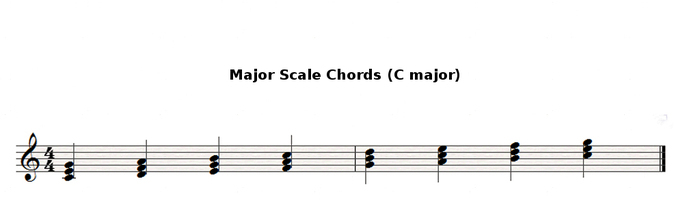
The relationship between chords and scales is foundational to music theory, influencing how musicians create and interpret music. Chords are built using specific notes derived from scales, which means that a comprehensive understanding of scales is essential for constructing effective chords. This knowledge not only enriches a musician’s toolkit but also enhances their ability to express musical ideas.Understanding scales is vital when building chords, as each scale provides a set of tones that can be used to construct harmonic structures.
Chords can be formed by combining certain notes from a scale, typically following specific patterns. By mastering various scales, musicians can expand their harmonic vocabulary and create a wide range of emotional and tonal textures.
Common Scales Used for Chord Construction
Several scales are particularly noteworthy for their widespread use in chord construction. Each of these scales offers distinct notes and characteristics that contribute to unique chord qualities. Below are some of the most common scales employed in the construction of chords:
- Major Scale: The major scale is one of the most fundamental scales, consisting of seven notes. The chords built from the major scale are often perceived as bright and happy. For example, the C major scale (C, D, E, F, G, A, B) leads to the chords C major, D minor, E minor, F major, G major, A minor, and B diminished.
- Minor Scale: The natural minor scale contains seven notes and is known for its somber and emotional qualities. For instance, the A minor scale (A, B, C, D, E, F, G) gives rise to A minor, B diminished, C major, D minor, E minor, F major, and G major chords.
- Pentatonic Scale: This five-note scale is widely used in various musical genres, including rock and blues. The C major pentatonic scale (C, D, E, G, A) generates chords like C major, D minor, and E minor, providing a simple yet effective harmonic base.
- Blues Scale: The blues scale, which adds a flattened fifth to the minor pentatonic, gives a unique flavor to chords. The C blues scale (C, E♭, F, F♯, G, B♭) can produce chords that resonate with a bluesy feel, such as C7, E♭7, and G7.
Understanding these scales is fundamental for composers and performers alike, as they dictate the harmonic possibilities available for chord construction.
Understanding Major and Minor Scales
The fundamental building blocks of music theory are major and minor scales, which form the backbone of harmony and melody in various musical genres. An understanding of these scales is crucial for any musician, as they provide a framework for constructing chords and improvising over different musical progressions.Major and minor scales are constructed using specific patterns of whole and half steps.
A major scale is cheerful and uplifting, while a minor scale evokes a more somber or introspective mood. The difference lies in the intervals that define each scale.
Structure of Major and Minor Scales
The major scale is built using the following pattern of whole (W) and half (H) steps: W-W-H-W-W-W-H. This structure translates to the intervals between the scale degrees, resulting in a distinct sound. For example, the C major scale consists of the notes: C-D-E-F-G-A-B-C.In contrast, the natural minor scale employs a different pattern of intervals: W-H-W-W-H-W-W. This scale creates a darker timbre.
For instance, the A minor scale includes the notes: A-B-C-D-E-F-G-A.To effectively illustrate the steps for constructing these scales, consider the following:
- Constructing a Major Scale:
- Identify the root note (e.g., C).
- Follow the major scale formula: W-W-H-W-W-W-H.
- The notes are: C, D, E, F, G, A, B, C.
- Constructing a Minor Scale:
- Select the root note (e.g., A).
- Apply the minor scale formula: W-H-W-W-H-W-W.
- The notes are: A, B, C, D, E, F, G, A.
Understanding the chords derived from these scales can enhance musical creativity. Both scales provide a rich array of chords, which can be used in various musical contexts. Here are examples of chords derived from both major and minor scales:
- Chords from the C Major Scale:
- C Major (C-E-G)
- D Minor (D-F-A)
- E Minor (E-G-B)
- F Major (F-A-C)
- G Major (G-B-D)
- A Minor (A-C-E)
- B Diminished (B-D-F)
- Chords from the A Minor Scale:
- A Minor (A-C-E)
- B Diminished (B-D-F)
- C Major (C-E-G)
- D Minor (D-F-A)
- E Minor (E-G-B)
- F Major (F-A-C)
- G Major (G-B-D)
Understanding these structures and their derived chords not only aids in composition but also in improvisation, allowing musicians to navigate through different musical landscapes with ease.
Building Triads from Scales
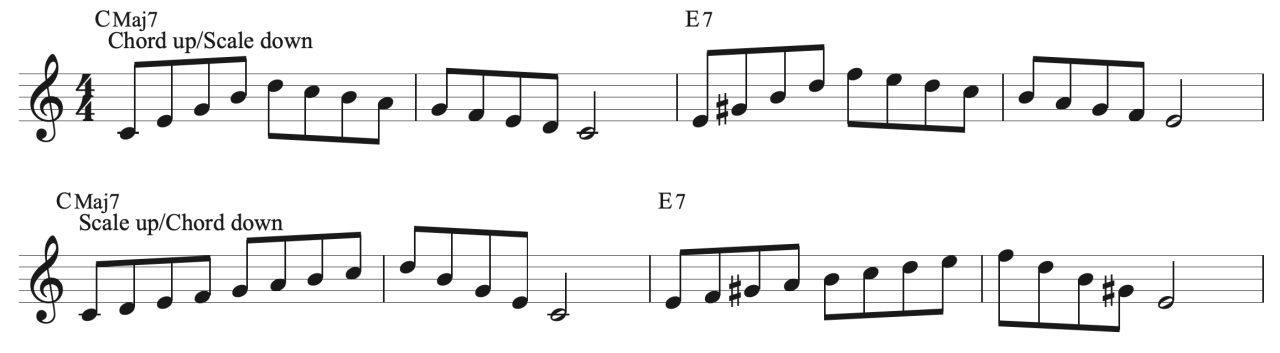
In the realm of music, triads serve as fundamental building blocks for harmony. Understanding how to construct triads from major and minor scales empowers musicians to create rich and dynamic compositions. This section delves into the process of forming triads, focusing on identifying the root, third, and fifth notes within the context of scales.To build a triad, one must first identify the scale from which the triad will be formed.
A triad consists of three essential notes: the root, the third, and the fifth. The root note is the foundational note on which the triad is built, while the third provides the harmonic quality (major or minor), and the fifth adds depth and resolution.
Identifying Root, Third, and Fifth Notes
Understanding the process of identifying the root, third, and fifth notes is crucial for constructing triads. Below is a step-by-step method to achieve this:
1. Choose a Scale
Begin with either a major or minor scale.
2. Locate the Root Note
The first note of the scale is the root.
3. Find the Third Note
For a major scale, the third note is four half steps above the root.
For a minor scale, the third note is three half steps above the root.
4. Determine the Fifth Note
The fifth note is seven half steps above the root for both major and minor scales.The following table illustrates various triads derived from different scales, demonstrating the relationships between the root, third, and fifth notes:
| Scale | Root | Third | Fifth | Triad |
|---|---|---|---|---|
| C Major | C | E | G | C Major (C-E-G) |
| A Minor | A | C | E | A Minor (A-C-E) |
| D Major | D | F# | A | D Major (D-F#-A) |
| B Minor | B | D | F# | B Minor (B-D-F#) |
Triads are the foundation of harmony, providing the essential structure for chord progressions.
Exploring Seventh Chords
Seventh chords play a crucial role in music harmony, adding depth and complexity to compositions. These chords are built upon triads and include an additional note, the seventh, which enhances their emotional and tonal qualities. Understanding the various types of seventh chords and their construction from major and minor scales is essential for any musician aiming to enrich their harmonic vocabulary.Seventh chords can be categorized into several types, each with distinct sound characteristics and contextual applications.
They significantly influence the overall feel of a piece, often serving as pivotal elements in chord progressions that lead to resolutions or transitions.
Types of Seventh Chords and Their Construction
In this section, we will explore the major types of seventh chords along with their construction from scales. The significance of each chord type is highlighted to illustrate their unique roles in music theory and composition.The four primary types of seventh chords are:
- Major Seventh Chord: Constructed by adding the seventh note of the major scale to a major triad. This chord has a bright and jazzy sound.
- Minor Seventh Chord: Formed by adding the seventh note of the minor scale to a minor triad. It often conveys a more introspective or contemplative mood.
- Diminished Seventh Chord: Built on a diminished triad with an added diminished seventh. This chord creates tension and is commonly used in classical and jazz music.
- Half-Diminished Seventh Chord: Constructed from a diminished triad with a minor seventh. It serves as a transitional chord in various harmonic contexts.
Each type of seventh chord can be constructed from either major or minor scales. For instance:
Major Seventh Chord
From C Major (C, E, G), add B (the seventh) to form Cmaj7 (C, E, G, B).
Minor Seventh Chord
From A Minor (A, C, E), add G (the seventh) to form Am7 (A, C, E, G).
Diminished Seventh Chord
From B Diminished (B, D, F), add A♭ (the seventh) to form Bdim7 (B, D, F, A♭).
Half-Diminished Seventh Chord
From C Half-Diminished (C, E♭, G♭), add B♭ (the seventh) to form Cø7 (C, E♭, G♭, B♭).The following examples compare triads and seventh chords, showcasing their structural differences and musical implications:
- Triad: C Major (C, E, G) vs. Seventh Chord: Cmaj7 (C, E, G, B)
- Triad: A Minor (A, C, E) vs. Seventh Chord: Am7 (A, C, E, G)
- Triad: B Diminished (B, D, F) vs. Seventh Chord: Bdim7 (B, D, F, A♭)
- Triad: C Half-Diminished (C, E♭, G♭) vs. Seventh Chord: Cø7 (C, E♭, G♭, B♭)
The inclusion of the seventh note transforms a simple triad into a richer harmonic entity, expanding the emotional range and complexity of the music.
Chord Extensions and Alterations
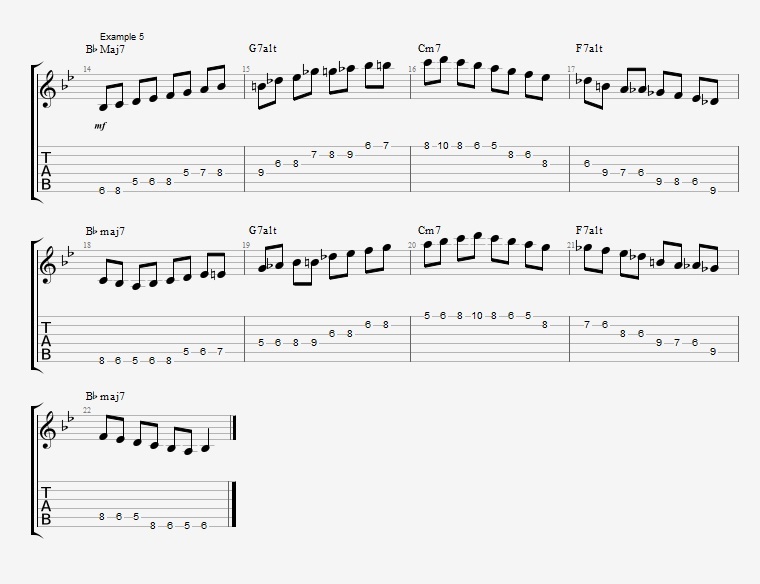
Chord extensions and alterations are advanced techniques in music theory that add depth and richness to harmonic progressions. By incorporating additional notes beyond the basic triad, musicians can create more complex and emotionally engaging sounds. Chord extensions typically involve the addition of tones that are a ninth, eleventh, or thirteenth above the root of the chord, enhancing the harmonic landscape and providing more color.Chord extensions can be derived from the scale that forms the basis of the chord.
For instance, when building an extended chord, one might start from a major or minor scale and add specific scale degrees to the triad. The process of adding these extensions involves understanding their relationship to the chord’s fundamental tones and how they fit within the scale. The following Artikels the addition of ninths, elevenths, and thirteenths to chords.
Addition of Ninths, Elevenths, and Thirteenths to Chords
Adding extensions to chords transforms their character and can evoke different moods in music. The process of enriching chords with extensions involves taking a basic chord and layering these additional notes. Here is a breakdown of how to add these extensions:
Ninths
The ninth is the second degree of the scale, raised an octave. For example, in a C major chord (C-E-G), adding a D (the ninth) results in a Cmaj9 chord (C-E-G-D).
Elevenths
The eleventh is the fourth degree of the scale, also raised an octave. In a Cmaj11 chord, the F (the eleventh) is added, resulting in C-E-G-F.
Thirteenths
The thirteenth is the sixth degree of the scale, raised an octave. For a Cmaj13 chord, adding A (the thirteenth) alongside the existing notes yields C-E-G-A.The following table illustrates examples of extended chords along with their corresponding scale origins:
| Extended Chord | Notes Included | Scale Origin |
|---|---|---|
| Cmaj9 | C, E, G, D | C Major |
| Cmaj11 | C, E, G, D, F | C Major |
| Cmaj13 | C, E, G, D, F, A | C Major |
| Dm9 | D, F, A, C, E | D Minor |
| G7(#11) | G, B, D, F, C# | G Mixolydian |
Incorporating these extensions can transform the emotional quality of a piece and allow for greater expression in performance. Mastery of chord extensions is an essential skill for composers and performers who seek to create nuanced and compelling music.
Utilizing Modes for Chord Building
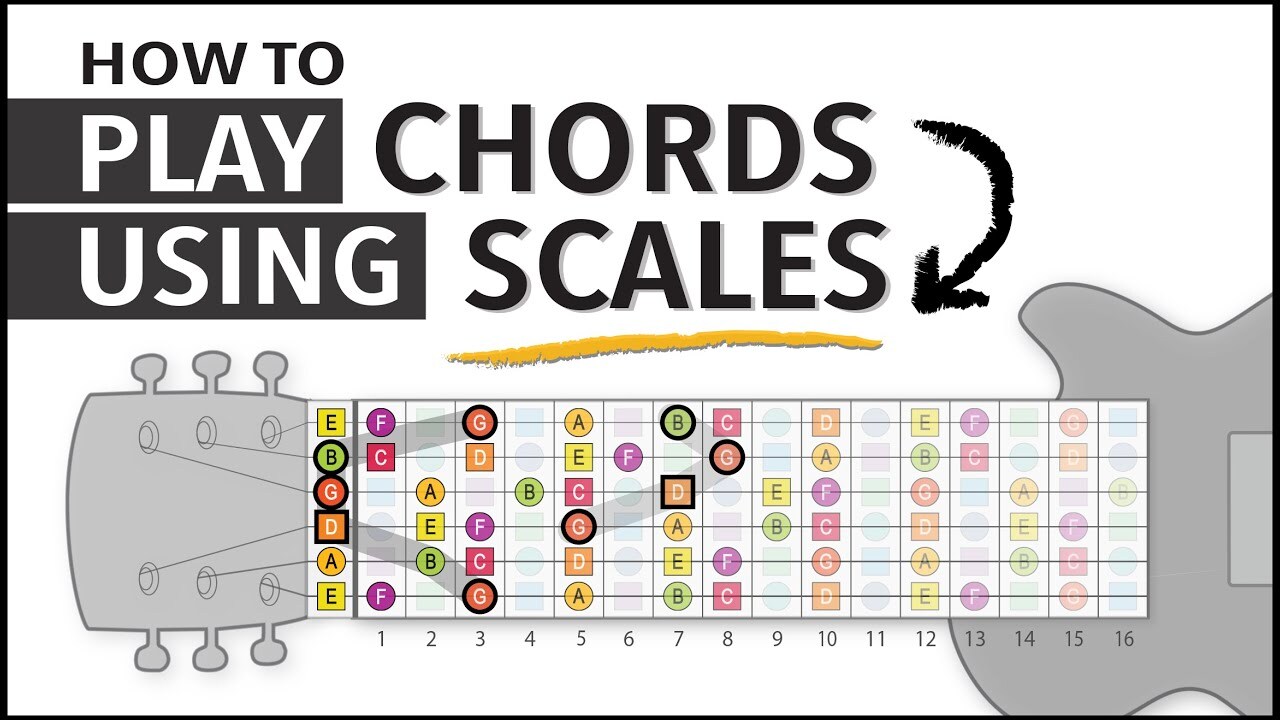
Musical modes are derived from scales, each offering a distinct tonal flavor that can be effectively utilized in chord construction. Understanding modes is essential for expanding harmonic vocabulary and enhancing improvisational skills. By leveraging the unique qualities of different modes, musicians can create a rich tapestry of chords that resonate within various musical contexts.Musical modes are variations of the major and minor scales, with each mode starting from a different degree of its parent scale.
Each mode has its characteristic intervals and tonalities, which directly influence the chords built upon them. The seven modes commonly used are Ionian, Dorian, Phrygian, Lydian, Mixolydian, Aeolian, and Locrian. Let’s explore how to build chords using these modes and examine the chords that can be derived from each.
Building Chords from Each Mode
The following sections detail the chords that can be constructed from each mode, showcasing their unique characteristics. Understanding how modes influence chord construction is vital for creating diverse harmonic progressions.
- Ionian (Major Scale): The Ionian mode is the first mode and corresponds to the major scale. Chords built from this mode include:
- Maj7 (e.g., Cmaj7)
- Min (e.g., Dm)
- Min (e.g., Em)
- Maj (e.g., F)
- Maj (e.g., G)
- Min7b5 (e.g., Am7b5)
- Dim (e.g., Bdim)
- Dorian: The Dorian mode is the second mode and has a minor quality with a raised sixth. Chords include:
- Min7 (e.g., Dm7)
- Maj7 (e.g., Cmaj7)
- Min (e.g., Em)
- Min7 (e.g., F#m7)
- 7 (e.g., A7)
- Min7b5 (e.g., Bm7b5)
- Maj (e.g., G)
- Phrygian: The Phrygian mode is the third mode characterized by a minor sound with a flat second. Chords include:
- Min (e.g., Em)
- Min7 (e.g., F#m7)
- Maj (e.g., G)
- Min (e.g., Am)
- 7 (e.g., B7)
- Min7b5 (e.g., Bm7b5)
- Dim (e.g., Ddim)
- Lydian: The Lydian mode is the fourth mode known for its bright and dreamy quality, featuring a raised fourth. Chords include:
- Maj7 (e.g., Fmaj7)
- Min (e.g., Gm)
- Min7 (e.g., Am7)
- Min (e.g., Bm)
- 7 (e.g., C7)
- Min7b5 (e.g., Dm7b5)
- Dim (e.g., Edim)
- Mixolydian: The Mixolydian mode is the fifth mode that resembles the major scale but with a flat seventh. Chords include:
- Maj7 (e.g., Gmaj7)
- Min7 (e.g., Am7)
- Min (e.g., Bm)
- Maj (e.g., C)
- 7 (e.g., D7)
- Min7b5 (e.g., Em7b5)
- Dim (e.g., F#dim)
- Aeolian (Natural Minor): The Aeolian mode is the sixth mode equivalent to the natural minor scale. Chords include:
- Min7 (e.g., Am7)
- Maj (e.g., C)
- Min (e.g., Dm)
- Maj (e.g., E)
- 7 (e.g., G7)
- Min7b5 (e.g., Bm7b5)
- Dim (e.g., Fdim)
- Locrian: The Locrian mode is the seventh mode characterized by a diminished quality. Chords include:
- Min7b5 (e.g., Bm7b5)
- Min (e.g., C)
- Dim (e.g., Ddim)
- Min (e.g., Em)
- Maj (e.g., F)
- Maj7 (e.g., Gmaj7)
- Min (e.g., A)
“Modes provide a versatile framework for chord building, allowing musicians to explore different tonalities and expressions.”
Practical Applications of Chords from Scales
Understanding how to apply the knowledge of chords derived from scales is essential for any musician engaged in songwriting, composition, and improvisation. Mastery of this knowledge allows a musician to create compelling harmonies, enhance melodies, and enrich their overall musical expression.Applying chords in songwriting and composition involves a deep understanding of the relation between scales and the chords that can be constructed from them.
Chords act as the building blocks of harmony, and by utilizing different scales, a songwriter can evoke a wide array of emotions and atmospheres. Whether you are crafting a catchy pop tune or a complex jazz piece, knowing how to effectively use chords from scales can elevate your musical creations.
Application in Songwriting and Composition
Incorporating chords derived from scales into your songwriting can significantly enhance the depth and texture of your music. Here are some strategies to consider:
- Utilizing Chord Progressions: Experiment with common progressions such as I-IV-V or ii-V-I. These foundational structures can be derived from the major or minor scales, providing a solid framework for your songs.
- Creating Contrast: Use different scales to create contrasting sections in your composition. For instance, transitioning from a major scale in the verse to a minor scale in the chorus can introduce emotional shifts.
- Incorporating Modulations: Modulate between keys by using chords from scales that share common tones. This technique can add surprise and interest to your compositions.
Improvising with Scales and Chords
Improvisation is a vital skill for musicians, and understanding the relationship between scales and chords can significantly enhance this ability. Here are various techniques to help integrate scales and chords during improvisation:
- Chord Tone Targeting: Focus on the notes of the chords while improvising. This technique ensures that your melodic lines blend harmoniously with the underlying chords.
- Using Scale Patterns: Familiarize yourself with scale patterns that correspond to specific chords. For example, when improvising over a Cmaj7 chord, using the C major scale or C Lydian mode can yield pleasing results.
- Rhythmic Variation: Experiment with different rhythmic patterns while improvising. Changing the rhythm can create dynamic interest, even when playing the same notes.
Exercises for Practicing Chord Construction from Scales
Practicing the construction of chords from scales is crucial for solidifying your understanding. Here are some exercises designed to enhance your skills in this area:
- Triad Construction: Choose a scale and construct triads starting from each note. For example, in the C major scale, create triads C, Dm, Em, F, G, Am, and Bdim.
- Seventh Chord Construction: Extend your practice by adding the seventh note to each triad. For the C major scale, this would result in Cmaj7, Dm7, Em7, Fmaj7, G7, Am7, and Bm7b5.
- Chord Progression Practice: Pick a chord progression and practice playing it in different inversions. This exercise will help you become familiar with how chords sound and feel in various contexts.
Common Mistakes in Chord Building
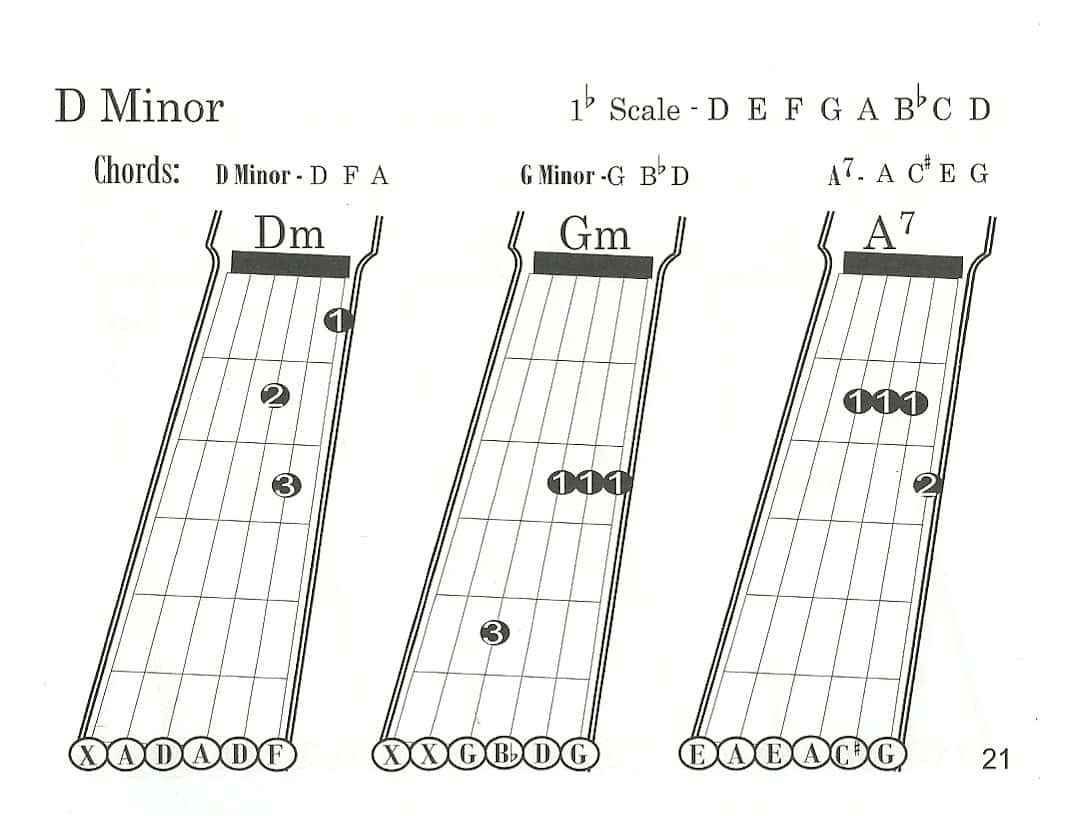
When building chords from scales, musicians often encounter several common pitfalls that can hinder their progress and creativity. Understanding these mistakes is crucial for developing a more refined approach to chord construction. This section identifies typical errors and offers effective strategies for avoidance, enhancing both comprehension and practical skills in music theory.One frequent mistake is the failure to recognize the unique qualities of different scales, leading to inappropriate chord choices.
Musicians may also neglect to consider the harmonic context in which a chord functions, resulting in dissonance or lack of resolution. Furthermore, rushing through the process of building chords can lead to oversights that undermine the overall musicality of a piece. To elevate one’s chord-building abilities, it is essential to adopt strategies that promote careful analysis and thoughtful construction.
Strategies to Avoid Common Mistakes
To effectively build chords while minimizing errors, consider the following strategies that emphasize a thorough understanding of scales and their corresponding harmonies. These strategies will aid in developing an informed and creative approach to chord construction.
- Understand Scale Degrees: Familiarize yourself with scale degrees and their functions within a scale. Recognizing the tonic, dominant, and subdominant functions can help in selecting appropriate chords.
- Utilize Chord Inversions: Experiment with different inversions of chords to find the voicings that best fit your musical context. This can add variety and depth to your chord progressions.
- Incorporate Tension and Release: Pay attention to how chords create tension and resolution within a progression. Aim for a balance that maintains listener interest while providing satisfying resolutions.
- Avoid Overcomplication: Start with simple triads before progressing to more complex chords. Building a strong foundation will help in layering additional extensions or alterations effectively.
- Listen Actively: Analyze recordings of various genres to understand how established musicians build and utilize chords. This can inspire new ideas and reveal common practices in chord construction.
“A well-constructed chord progression is the backbone of memorable and impactful music.”
By implementing these strategies, musicians can enhance their chord-building skills, leading to a more sophisticated and expressive musical output.
Final Conclusion
In summary, mastering the art of building chords from scales is an empowering journey that opens doors to endless musical possibilities. By understanding the structure and application of various scales and chords, musicians can avoid common pitfalls and enhance their songwriting and improvisation skills. As you continue to practice these techniques, remember that each chord constructed is a step towards enriching your musical expression.