How to Set the Action on Your Acoustic Guitar is an essential guide for every musician looking to enhance their playing experience. Understanding guitar action is crucial as it directly influences both playability and tonal quality. Proper action adjustment can lead to a more enjoyable playing experience by minimizing fret buzz and ensuring comfortable string height.
This guide will provide you with the knowledge and tools necessary to measure and adjust the action of your acoustic guitar effectively. Through step-by-step instructions and practical tips, you will learn how to make adjustments to the nut and saddle heights, assess neck relief, and implement final adjustments to achieve your desired sound and feel.
Understanding Guitar Action
The term ‘action’ in the context of an acoustic guitar refers to the height of the strings above the fretboard. This critical measurement can significantly influence the playability, tone, and overall performance of the instrument. Properly set action ensures that the guitar is comfortable to play and produces a clear sound without unwanted noise. Action plays a vital role in determining how easily a guitarist can press down the strings and whether the guitar produces a clean tone.
A higher action may lead to more difficulty in pressing the strings down, potentially causing fret buzz or muted notes if the strings are too close to the frets. Conversely, low action can result in buzzing, where strings vibrate against the frets and create an undesirable sound.
Definition of Action
Action is defined as the distance between the strings and the fretboard, typically measured at the 12th fret. This measurement can vary based on personal preference, playing style, and the type of music being performed. A standard action height for an acoustic guitar may range from 2.5 mm to 3 mm for the bass strings and 2 mm to 2.5 mm for the treble strings.
The following points elaborate on the significance of proper action setting:
- Playability: Action greatly influences how easily a guitarist can play chords and melodies. A well-set action allows for smoother transitions between notes and chords.
- Tone Quality: The action affects the vibration of the strings; higher action can produce a fuller sound while lower action may lead to a brighter tone but at the risk of fret buzz.
- Fret Buzz: Incorrect action height can lead to fret buzz, which occurs when strings are too close to the frets, causing an unwanted rattling sound.
Effects on String Height and Fret Buzz
The height at which the strings are set directly impacts both playability and tone. If the action is too high, players might encounter difficulty in fretting notes, leading to fatigue during prolonged play. On the other hand, if the action is too low, the strings may easily touch the frets during play, resulting in fret buzz. To adjust action effectively, consider the following factors:
- Neck Relief: The neck of the guitar must have a slight curve, allowing the strings to vibrate freely without hitting the frets. Adjusting the truss rod can help manage neck relief and, therefore, action.
- Saddle Height: The bridge saddle’s height influences the action; raising or lowering it is a common method for adjusting action without altering the neck’s relief.
- Nut Height: The nut at the top of the fretboard affects the action as well. A nut that is too high raises the action unnecessarily, while a low nut can lead to fret buzz at the first few frets.
“Proper action setup enhances playability, reduces fret buzz, and optimizes tonal quality.”
Tools Needed for Adjusting Action
When it comes to adjusting the action on your acoustic guitar, having the right tools is essential for achieving the desired results. Proper action adjustment can enhance playability, improve tone, and ensure a comfortable experience for the player. Below is a list of essential tools that are commonly used in the process of adjusting guitar action, along with detailed descriptions of their purposes and best practices for safe and effective use.
Essential Tools for Action Adjustment
Before embarking on any adjustments, it is critical to equip yourself with the necessary tools to ensure precision and safety. The following tools are commonly utilized during the action adjustment process:
- Tuner: A tuner is essential for ensuring your guitar is in tune before making any adjustments. Properly tuned strings aid in accurate action measurements and adjustments.
- Ruler or Action Gauge: This tool enables you to measure string height accurately from the fretboard. An action gauge is specifically designed for this purpose, often providing measurements in millimeters or inches.
- Capo: A capo is useful for accurately measuring the neck relief and action at the nut while applying consistent pressure to the strings.
- Allen Wrenches: Used for truss rod adjustments, these wrenches come in various sizes and are crucial for fine-tuning the neck curvature to achieve optimal action.
- Screwdrivers: Both Phillips and flat-head screwdrivers are required to adjust the bridge saddle and nut height. Proper adjustment of these components directly affects the overall action of the guitar.
- File Set: A set of files can be employed to gradually lower the height of the saddle or nut slots, allowing for precise adjustments to string height without causing damage.
- String Winder: This tool simplifies the process of changing strings, which is often necessary when adjusting action, ensuring that the strings are removed and installed quickly and efficiently.
Each of these tools plays a crucial role in the action adjustment process. Utilizing them with care can lead to a successful and satisfactory outcome.
“Using the right tools not only makes the adjustment process easier but also protects your instrument from potential damage.”
When using these tools, it is vital to follow best practices to ensure that adjustments are made safely and effectively. Always work in a well-lit area to enhance visibility, and take your time to measure accurately. It is advisable to make small adjustments gradually, checking each change to understand its impact before proceeding further. Additionally, proper maintenance of tools, such as keeping them clean and rust-free, will enhance their longevity and ensure they function correctly during the adjustment process.
By equipping yourself with these essential tools and following these best practices, you will be well-prepared to adjust the action on your acoustic guitar confidently and effectively.
Measuring Guitar Action
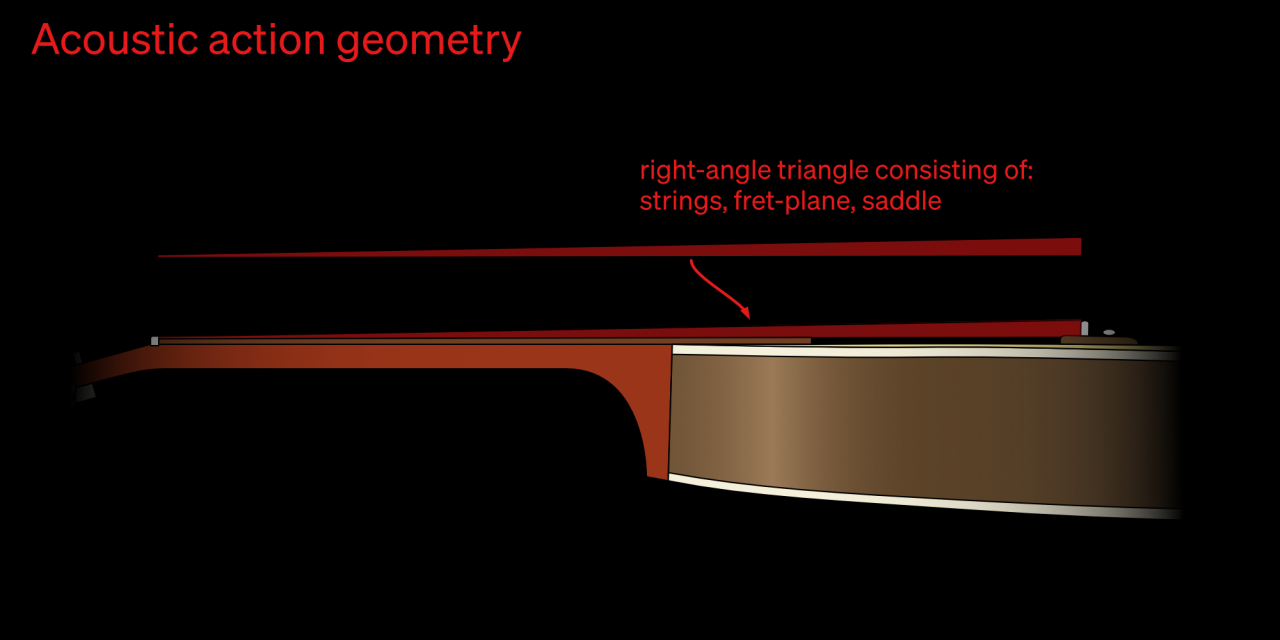
Measuring the action of your acoustic guitar is a crucial step in ensuring optimal playability and sound quality. This process involves determining the height of the strings above the fretboard, which can significantly affect your playing experience. A proper measurement will help you set your guitar to your personal comfort and style, whether you prefer low, medium, or high action.To accurately measure the action at the 12th fret, you will need a ruler or a string action gauge.
Begin by placing the ruler or gauge perpendicular to the fretboard, ensuring it rests on the 12th fret. The measurement should be taken from the top of the fret to the bottom of each string. This method provides a clear and precise reading of the action height, allowing for informed adjustments.
Steps to Check String Height on Various Strings
Understanding the specific measurements for each string is essential for fine-tuning your guitar’s action. Follow these steps to check the string height accurately:
1. Position the Guitar
Ensure the guitar is on a flat surface, ideally on a guitar stand or lap, to avoid any unwanted movement during measurement.
2. Select a Measuring Tool
Use a ruler with millimeter or 1/16-inch markings or a specialized string action gauge for more precise measurements.
3. Locate the 12th Fret
Identify the 12th fret, which is the midpoint of the fretboard and often the standard point for action measurement.
4. Measure Each String
Place the ruler or gauge on top of the 12th fret. Measure the distance from the top of the fret to the bottom of each string, ensuring that you measure vertically.The following are common measurements for low, medium, and high action:
- Low Action: Generally ranges from 1.5mm to 2.0mm for the high E string and 2.0mm to 2.5mm for the low E string. This setup facilitates ease of play, especially for lead guitarists.
- Medium Action: Typically falls between 2.0mm to 2.5mm for the high E string and 2.5mm to 3.0mm for the low E string. This height strikes a balance between playability and tone.
- High Action: Usually measures from 2.5mm up to 3.5mm or more for the high E string and 3.0mm to 4.0mm or more for the low E string. Higher action can produce a richer tone but may require more finger strength.
“Optimal action height is a personal preference that can greatly influence both the sound and comfort level of your playing.”
By understanding these measurements and their implications, you can better assess the action of your acoustic guitar and make adjustments that suit your playing style. Accurate measurements will ultimately enhance your performance and enjoyment of the instrument.
Adjusting the Nut Height
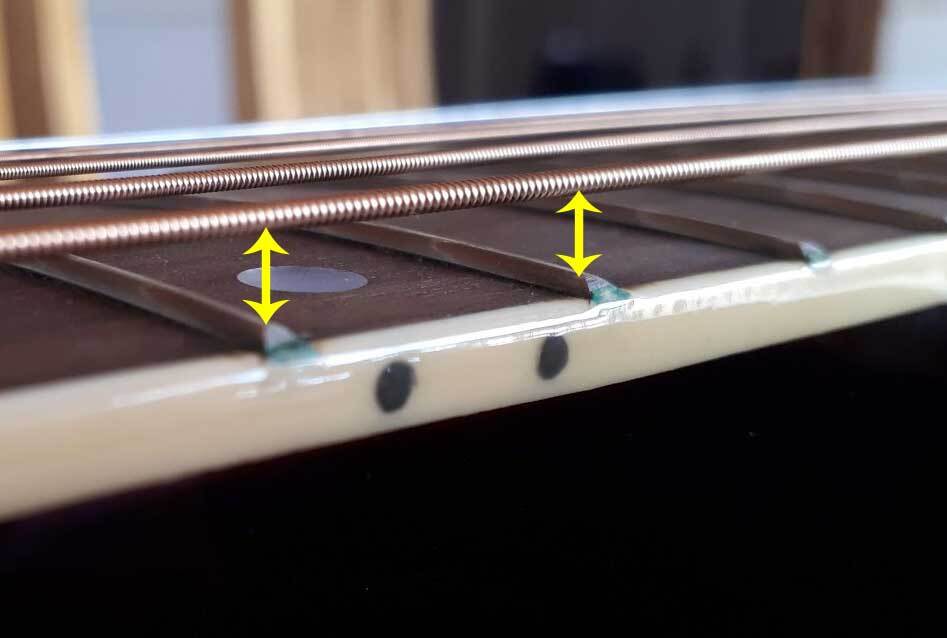
The nut height of your acoustic guitar plays a crucial role in defining the instrument’s playability and overall tone. Proper nut height ensures that the strings are at an optimal distance from the fretboard, allowing for ease of play and the avoidance of string buzzing. This section will address the steps needed to identify if the nut height is correct, followed by a guide on adjusting it appropriately.Identifying the correct nut height involves checking the clearance of the strings over the first fret, which can significantly impact the guitar’s action.
To determine if adjustments are necessary, follow these steps:
Process for Identifying Nut Height
Firstly, ensure that your guitar is in a stable and comfortable playing position. The following points should guide you in assessing nut height:
- Press down on the strings at the third fret.
- Observe the string clearance above the first fret using a feeler gauge or a business card.
- Ideal clearance is typically around 0.020 inches (0.5 mm) for most acoustic guitars, though this can vary slightly based on personal preference and playing style.
If you find that the strings are too high or too low at the first fret, it may be necessary to adjust the nut height. The following steps Artikel the process to make these adjustments effectively:
Step-by-Step Guide for Adjusting Nut Height
Before proceeding with adjustments, ensure you have the necessary tools, including a nut file, a ruler or feeler gauge, and a set of fine sandpaper. The following steps illustrate the adjustment process:
1. Assessing the Nut
Confirm the current height of the nut slots by measuring the string clearance at the first fret.
2. Removing the Nut
Carefully remove the nut from the guitar. This may involve gently tapping it out or using a nut removal tool, being cautious not to damage the finish.
3. Filing the Nut Slots
Use a nut file to lower the height of the slots gradually.
Begin by filing a small amount and check frequently to avoid removing too much material.
Aim for the ideal clearance previously discussed.
4. Sanding the Bottom of the Nut
If the slots are already at an appropriate height, consider sanding the bottom of the nut itself for a more substantial lowering.
5. Reinstalling the Nut
Once the adjustments are made, reinstall the nut using a small amount of glue or adhesive to secure it in place.
6. Final Check
After reinstallation, measure the clearance once more to ensure it is within the desired range. The impact of nut height on overall action cannot be overstated. If the nut height is too high, it can lead to increased action and difficulty in pressing the strings down, resulting in strain during play. Conversely, a nut that is too low can cause buzzing and hinder the guitar’s tonal quality.
Thus, maintaining the proper nut height is essential for achieving optimal playability and sound quality from your acoustic guitar.
Adjusting the Saddle Height
Determining the saddle height on your acoustic guitar is crucial for achieving optimal playability and sound quality. The saddle, being an integral part of the guitar’s bridge, directly influences both string action and intonation. If you have noticed difficulties in playing, such as buzzing strings or an uncomfortable action, adjusting the saddle height may be necessary.To ascertain whether the saddle requires adjustment, examine the string action at the 12th fret.
A common measurement is around 2.5 mm for the low E string and 2.0 mm for the high E string; values higher or lower than this could indicate a need for adjustment. Additionally, listen for any fret buzz when playing open chords or fretted notes. If buzzing occurs, the saddle may be too low. Conversely, if you struggle to press down the strings, the saddle may be too high.
Procedure for Adjusting Saddle Height
Shaving down or raising the saddle involves a careful and methodical approach. The following steps Artikel the procedure for both lowering and raising the saddle:
1. Shaving Down the Saddle
Tools Required
Use sandpaper or a file, preferably with a fine grit for a smoother finish.
Preparation
Remove the saddle from the bridge by gently lifting it out.
Adjustment Process
Place the saddle on a flat surface.
Sand down the bottom of the saddle, checking frequently to ensure you do not remove too much material.
Aim for a gradual reduction, testing the saddle height after each pass.
Reinstallation
Once satisfied with the height, reinstall the saddle in the bridge and recheck the action.
2. Raising the Saddle
Material Addition
If the saddle is too low, raising can be accomplished by adding material to the bottom.
Using Shims
Obtain a thin shim made from wood or plastic, and cut it to fit the width of the saddle.
Placement
Place the shim under the saddle before reinstalling it into the bridge, ensuring a snug fit.
Testing
After reinstallation, measure the action again to confirm the height is suitable.Adjusting saddle height can have significant effects on the instrument’s playability. Lowering the saddle can enhance playability by reducing string height, making it easier to fret. However, excessively low action can lead to fret buzz, compromising sound quality. Alternatively, a higher saddle might improve tone but can make the guitar more difficult to play, particularly for beginners.
The ideal saddle height strikes a balance between comfort and tonal quality, which varies from player to player. For example, a fingerstyle player may prefer a lower action for ease of playing intricate patterns, while a flatpicker might opt for a slightly higher action to prevent unwanted string buzzing during aggressive strumming.
“The right saddle height not only affects playability but also influences the tonal characteristics of the guitar.”
Neck Relief and Its Impact on Action
Neck relief refers to the slight curvature of the guitar neck that allows for optimal playability. Understanding neck relief is crucial for maintaining comfortable action on your acoustic guitar. An appropriate amount of relief prevents string buzz while ensuring that the strings are not too high, which can make playing difficult. This balance is essential for achieving a good sound and an enjoyable playing experience.Neck relief can significantly influence the action height of your guitar strings.
An excessively straight neck can lead to buzzing, particularly in the lower frets, while too much curvature can result in higher action, making the guitar harder to play. To ensure your guitar is set up correctly, it is essential to check and adjust neck relief as needed.
Guidelines for Checking Neck Relief
To accurately assess the neck relief of your guitar, a straightedge is a valuable tool. Follow these guidelines for an effective check:
1. Preparation
Ensure your guitar is in a stable environment, with a relative humidity of around 40-50%, and allow the guitar to acclimate.
2. Frequent Reference Points
Place a straightedge along the frets of the guitar, spanning from the nut to the body of the guitar.
3. Measuring Relief
Inspect the gap between the straightedge and the strings at the 8th fret. A gap of approximately 0.25mm to 0.5mm is generally acceptable for standard action.
4. Observation
If the string touches or is too far from the straightedge at the 8th fret, adjustments will be necessary.
Methods for Adjusting Neck Relief via Truss Rod
Adjusting the neck relief is typically done using the truss rod, which allows for minor adjustments to the neck’s curvature. Consider the following methods for effective adjustments:
Identify Adjustment Type
Understand whether your truss rod is a single-action or dual-action type, as this will dictate the method of adjustment.
Tools Required
Use the appropriate truss rod wrench, which usually comes with the guitar or can be purchased separately.
Direction of Adjustment
Tightening the Truss Rod
This action reduces relief, straightening the neck. It is beneficial when the neck has too much curvature.
Loosening the Truss Rod
This allows for additional relief, which is helpful if the neck is too straight or back-bowed.
Incremental Adjustments
Make small adjustments, typically a quarter turn, and allow the guitar to settle for a few hours before rechecking the relief.By following these guidelines, you can ensure your guitar’s neck relief is optimized, contributing to the overall playability and sound quality of your acoustic guitar.
Final Adjustments and Testing Playability
After making the necessary modifications to your guitar’s action, it is essential to perform final adjustments and test the playability to ensure your instrument meets your playing needs. The adjustments can significantly impact not only the feel of the guitar but also its overall sound quality. By methodically assessing these final elements, you can achieve optimal performance from your acoustic guitar.To effectively gauge the success of your adjustments, utilize the following checklist.
This list assists you in confirming that all necessary steps have been taken to ensure your guitar is set up correctly post-adjustment.
Final Adjustments Checklist
Carefully consider the following points to verify the adjustments made to your guitar:
- Confirm that the nut height is appropriate and strings sit comfortably in the nut slots.
- Ensure the saddle height is adjusted to desired specifications, considering string height at the 12th fret.
- Check neck relief using a capo and a feeler gauge to confirm it falls within the recommended range.
- Verify the intonation on each string; it should be correct to ensure accurate pitches across the fretboard.
- Inspect the string action at the 12th fret for each string to ensure consistency and comfort.
- Play chords and scales across the neck to assess any buzzing or tuning issues.
After completing these checks, it’s imperative to evaluate how well your guitar plays following the adjustments. Testing playability involves several key practices that help determine the effectiveness of your modifications.
Testing Playability
Testing the playability of your guitar after adjustments is crucial to ensure it meets your individual playing style. Here are guidelines to assess how your instrument feels and sounds:
- Play scales and chords across various positions on the neck to identify any buzzing or discomfort.
- Experiment with fingerstyle techniques, strumming, and flatpicking to evaluate response and feel.
- Assess the action height for each string; it should allow for comfortable fretting without excessive force.
- Listen for clarity in sound and intonation accuracy. Each note should ring out clearly without muddiness.
- Make note of any areas where the fretting feels particularly difficult or easy, allowing for fine-tuning.
Fine-tuning action based on your playing style is vital for achieving a personalized setup that enhances your performance.
Fine-Tuning Action Based on Playing Style
Adjusting the action of your guitar can greatly benefit from understanding your unique playing style. Depending on whether you favor aggressive strumming, delicate fingerpicking, or a mix of both, the action height may require different considerations.
- For aggressive strumming techniques, a slightly higher action may prevent string buzzing and improve overall tone.
- If you predominantly use fingerstyle, a lower action can facilitate ease of play and quicker transitions between notes.
- Consider string gauge; heavier strings can handle higher action better without buzzing while providing a fuller tone.
- Make gradual adjustments; small changes can significantly affect playability, so adjust incrementally and test frequently.
- Document your preferred action settings for future reference, especially if attempting different string gauges or tunings.
Through careful evaluation and fine-tuning based on your playing style, you can ensure that your guitar setup not only enhances your playability but also supports your musical expression.
Common Issues and Troubleshooting

Improper action settings on an acoustic guitar can lead to a variety of playability issues. These problems often manifest as difficulties in fretting, buzzing sounds, and overall discomfort while playing. Identifying these issues early on can significantly enhance your playing experience and prolong the life of your instrument.When the action on your guitar is too high or too low, it can create several complications.
Below are some common problems associated with improper action settings, along with troubleshooting steps to address each one effectively.
Fretting Difficulties
Fretting difficulties occur when the strings are either too high above the fretboard, causing strain on the fingers, or too low, resulting in buzzing. It is essential to recognize these signs to take corrective action.
- If strings are too high, check the height at the nut and saddle. Adjusting either can help reduce the action.
- If buzzing is heard when playing open strings or fretting, examine the frets for wear. High frets may need to be leveled.
- Inspect for neck relief by holding down the first and last fret and measuring the gap at the eighth fret. A gap of around 0.25 mm is generally ideal.
Buzzing Sounds
Buzzing sounds, often caused by string vibrations hitting the frets, are a common issue when action is not set correctly. Identifying the source of buzzing is crucial for effective resolution.
- If the buzz occurs only on certain frets, this may indicate a high fret. Use a tuner to determine specific frets that cause buzzing.
- If buzzing persists across multiple frets, consider adjusting the action height at the saddle or nut.
- If adjustments do not resolve the issue, checking for issues with the neck relief or warped neck may be necessary.
String Intonation Issues
Improper action settings can affect string intonation, leading to notes sounding out of tune as you play further up the fretboard.
- Check intonation by comparing the pitch of the open string to the pitch of the 12th fret. If there is a discrepancy, adjustments may be needed at the saddle.
- Correcting the saddle position can often restore proper intonation. For example, if the 12th fret is sharp, the saddle needs to be moved back.
- If adjustments do not rectify the issue, the problem may lie in the nut positioning or string gauge, calling for more extensive evaluation.
When to Seek Professional Help
While many adjustments can be performed at home, there are instances when professional assistance is advisable.
- If multiple issues exist simultaneously, such as buzzing, intonation problems, and extreme action differences, a professional luthier can assess the situation comprehensively.
- In cases of neck warping or significant fret wear, expert intervention is essential to avoid further damage.
- When adjustments seem to cause additional problems rather than resolving existing ones, consulting a professional can provide clarity and proper solutions.
Recognizing these common issues and their troubleshooting steps allows guitarists to maintain optimal playability and sound quality. Understanding when to seek professional help ensures your guitar remains in top condition and enhances your playing experience.
Maintenance Tips for Sustaining Action
Routine maintenance of your acoustic guitar is essential for sustaining proper action and ensuring optimal playability. Regular upkeep not only enhances the longevity of your instrument but also provides the best possible tone and performance. Below are some vital maintenance tips to help you maintain the action of your acoustic guitar.
Routine Maintenance Tasks
To sustain proper action, several routine maintenance tasks should be performed regularly. These practices not only help maintain the guitar’s performance but also prevent larger issues from developing over time. The following tasks are recommended:
- Regular Cleaning: Clean the strings and body of the guitar using a soft, dry cloth to remove dirt and sweat, which can affect playability.
- String Replacement: Replace guitar strings every 1-4 weeks, depending on usage, as worn strings can negatively impact action.
- Humidity Control: Use a hygrometer to monitor humidity levels, aiming for 45-55% humidity to avoid wood warping or cracking, which can affect action.
- Neck Relief Check: Periodically check neck relief to ensure it remains within recommended specifications, as changes can influence action.
- Intonation Adjustment: Regularly check and adjust the intonation to maintain accurate tuning across the fretboard.
Impact of Environmental Factors
Environmental factors such as temperature and humidity significantly impact the action of your guitar. Changes in these elements can cause the wood to expand or contract, leading to variations in action height. To mitigate these effects, it is advisable to take specific measures:
- Avoid Direct Sunlight: Keep the guitar away from direct sunlight to prevent the wood from drying out and warping.
- Temperature Regulation: Store your guitar in a controlled environment, ideally between 65-75°F, to maintain its structural integrity.
- Humidity Packs: Use humidity control packs inside your guitar case to help maintain consistent moisture levels.
Recommendations for Regular Check-ups
Regular check-ups and adjustments are crucial for ensuring your guitar remains in optimal condition. It is recommended to schedule professional assessments at least once a year, or more frequently if you play regularly. During these check-ups, the following should be evaluated:
- Neck Adjustments: A professional can make precise adjustments to the neck relief and angle, ensuring ideal action.
- Saddle and Nut Inspection: The saddle and nut should be examined and adjusted as needed to maintain proper action height.
- Fret Condition: Inspecting the frets for wear or unevenness helps in maintaining proper playability.
“Regular maintenance not only preserves the quality of your guitar but also enhances your overall playing experience.”
Closing Notes

In conclusion, mastering How to Set the Action on Your Acoustic Guitar is vital for achieving optimal performance and playability. By understanding the components that affect action—such as nut and saddle height, neck relief, and regular maintenance—you can enjoy a guitar that responds beautifully to your playing style. Remember to regularly check and adjust your guitar action, ensuring that your instrument remains in top condition for years to come.