Accurate guitar tuning is essential for achieving the desired sound and musical harmony. Understanding the various types of guitar tunings and the components involved, such as strings and tuning pegs, lays the foundation for a rewarding musical experience. This guide provides an in-depth exploration of how to tune a guitar by ear, allowing musicians to develop their auditory skills and enhance their playing abilities.
Through a systematic approach, we will delve into the ear training process, important intervals for tuning, and the practical techniques involved in tuning a guitar without reliance on electronic devices. By the end of this discussion, you will be equipped with the knowledge and confidence to tune your guitar accurately and effectively.
Understanding Guitar Tuning
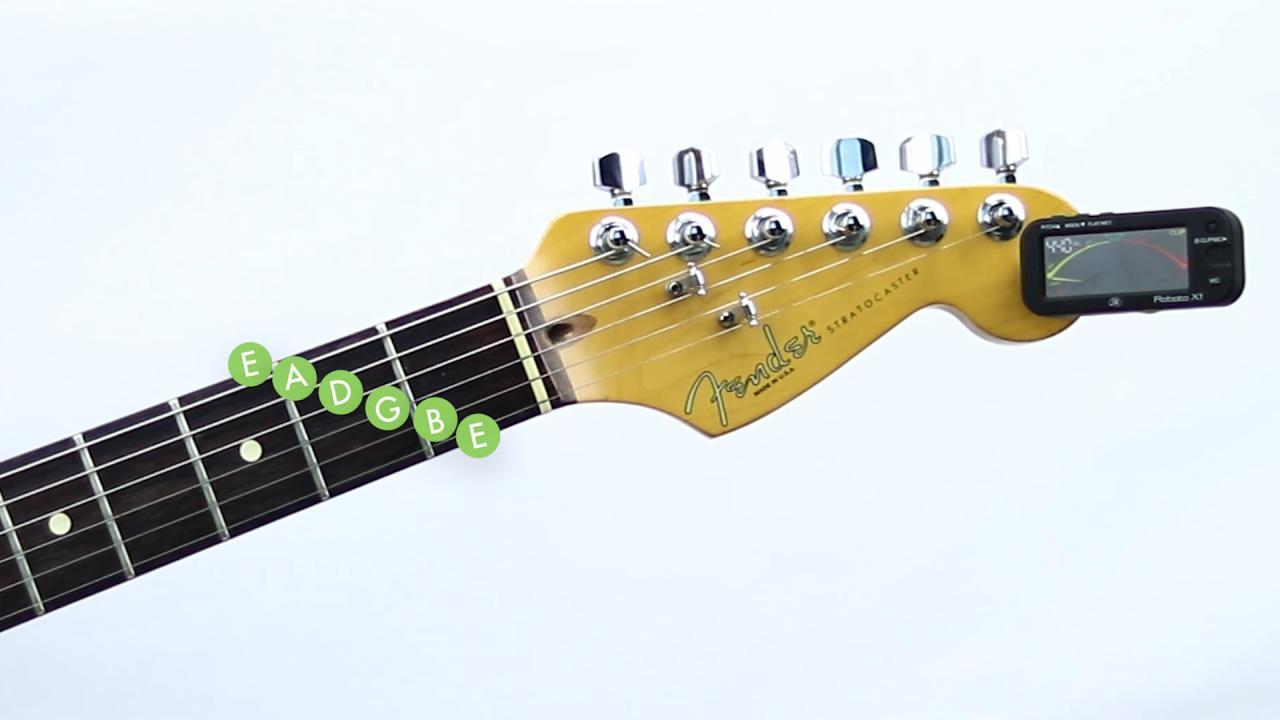
Tuning a guitar is a fundamental skill that every guitarist must master. An accurately tuned guitar not only enhances the overall sound quality but also significantly affects the playability and enjoyment of the instrument. Moreover, it ensures that musicians can play along with others seamlessly, making it an essential aspect of any musical endeavor.The process of tuning a guitar involves adjusting the tension of its strings to achieve specific pitches that correspond to standard tuning or other variations.
There are several types of guitar tunings available, each serving different musical styles and preferences. Understanding these variations is crucial for any guitarist looking to expand their musical repertoire.
Importance of Accurate Tuning
Accurate tuning is vital for a number of reasons that directly influence the sound and performance of the guitar. A well-tuned guitar produces notes that are in harmony with each other, creating a pleasant listening experience. When tuning is neglected, the resulting dissonance can lead to frustration during practice or performance. Common consequences of poor tuning include:
- Inability to play in harmony with other instruments.
- Frustration for both the player and audience.
- Increased difficulty in learning new songs accurately.
- Reduced enjoyment of playing and listening.
Types of Guitar Tunings
Guitarists can explore a variety of tunings based on their musical needs. Standard tuning (EADGBE) is the most common, but there are many alternate tunings that provide different tonalities and open up new possibilities for composition and improvisation. Below are a few popular alternate tunings:
- Drop D Tuning: DADGBE – Lowers the low E string to a D, facilitating power chords and heavy riffs.
- Open G Tuning: DGDGBD – Creates a rich, resonant sound ideal for slide guitar.
- Open D Tuning: DADF#AD – Provides a full, open sound, great for fingerstyle and slide techniques.
- C6 Tuning: CEGACE – Commonly used in Hawaiian and country music, it allows for unique chord voicings.
Components Involved in Guitar Tuning
Understanding the components involved in guitar tuning is essential for achieving the desired sound. The primary elements include strings and tuning pegs, each playing a significant role in the tuning process.The guitar strings are made from various materials, such as nickel, bronze, or stainless steel, which can affect their tonal characteristics. The tension of each string determines its pitch, and players can adjust this tension using the tuning pegs.
Key components include:
- Strings: Each string corresponds to a specific note, and their gauge influences tone and playability.
- Tuning Pegs: Located on the headstock, these allow for the adjustment of string tension to reach the desired pitch.
- Bridge: The bridge supports the strings and transfers vibrations to the body of the guitar, affecting resonance and tone.
- Nut: This is located at the base of the headstock, guiding the strings and affecting action and tuning stability.
By understanding these components and their functions, guitarists can better appreciate the intricacies of guitar tuning and its impact on overall performance. Tuning is not merely a technical skill but an essential part of the musician’s journey, enhancing both the instrument’s sound and the player’s experience.
The Ear Training Process

Developing the ability to tune a guitar by ear requires a systematic approach to ear training, which is essential for musicians of all levels. Through consistent practice, musicians can attain a heightened awareness of pitch and interval relationships. This process not only facilitates tuning instruments accurately but also enhances overall musicality and listening skills.The ear training process for musicians involves recognizing pitches and intervals, which is crucial for tuning a guitar effectively.
Intervals are the distances between two notes, and understanding these relationships allows guitarists to identify when their instrument is in tune. The foundational intervals include the perfect fourth, perfect fifth, and octave, which can be easily applied to the standard tuning of a guitar.
Crucial Intervals for Tuning a Guitar
Recognizing specific intervals is vital for accurately tuning a guitar by ear. The following intervals are fundamental for establishing proper tuning:
- Perfect Fourth: The distance between the first and fifth string (E and A) on a standard-tuned guitar.
- Perfect Fifth: The distance between the second and third strings (B and G) when tuning the G string to the B string.
- Octave: The interval between the open strings and their corresponding fretted notes, typically used for the sixth string (E) to the twelfth fret (E).
Understanding these intervals enables guitarists to accurately tune their instruments by comparing notes and adjusting as necessary.
Exercises to Enhance Auditory Skills
Practicing specific exercises can greatly improve auditory skills essential for tuning a guitar. Engaging in these exercises consistently will help develop a trained ear for recognizing pitch differences. One effective exercise is to practice interval recognition. Start by playing a note on your guitar, then play another note while focusing on identifying the interval between them. Gradually increase the complexity as your skills improve.Additionally, consider vocalizing the notes you hear.
This exercise can reinforce your ability to identify pitches. Singing intervals, such as the perfect fifth or the octave, can help solidify your understanding of their sound characteristics.A more advanced exercise involves using a tuner as a reference while attempting to replicate the pitch by ear. First, listen to the note played and then try to match it on your guitar without looking.
This practice builds confidence in your ear-training abilities.In summary, the ear training process for musicians should focus on recognizing crucial intervals and engaging in targeted exercises. As you refine your auditory skills, you will find tuning your guitar by ear becomes a more intuitive and rewarding experience.
Step-by-Step Guide to Tuning by Ear
Tuning a guitar by ear is a valuable skill that enhances your musicality and deepens your understanding of pitch relationships. This guide will walk you through a systematic approach to achieve accurate tuning without relying on electronic tuners. By honing your ear, you will not only tune your instrument effectively but also develop your overall musical skills.Standard tuning reference pitch, particularly the A440 frequency, is widely recognized in music.
This pitch designates that the note A above middle C vibrates at 440 Hz. It serves as a starting point for tuning instruments and helps ensure that musicians can play harmoniously together.
Step-by-Step Procedure for Tuning
The following steps Artikel the process of tuning a guitar by ear, using the A440 reference pitch:
1. Tune the A String
Begin by tuning the fifth string (A) to the reference pitch of 440 Hz. You can use a tuning fork, a piano, or any device that produces this pitch. Make sure that the pitch matches as closely as possible.
2. Tune the D String
Play the open A string and then press the fifth fret on the A string to produce the note D. Adjust the D string (fourth string) until it matches the pitch of your fretted note on the A string.
3. Tune the G String
Now, play the fifth fret on the D string to produce the note G. Tune the G string (third string) to match this pitch.
4. Tune the B String
Next, play the fourth fret on the G string to get the note B. Tune the B string (second string) accordingly.
5. Tune the High E String
Finally, play the fifth fret on the B string to produce the note E. Adjust the high E string (first string) to match this pitch.This method of tuning is effective because it relies on the intervals between strings, which helps create a harmonious tuning overall.
Comparison of Tuning Methods by Ear
Understanding the different methods for tuning by ear can help you choose the approach that best fits your musical style and needs. Below is a comparative table highlighting several common methods:
| Method | Description | Advantages | Disadvantages |
|---|---|---|---|
| Standard (A440) | Tuning the A string to 440 Hz, then tuning the rest of the strings relative to it. | Widely accepted standard, effective for group settings. | Requires a tuning reference pitch. |
| Fifth Fret Method | Tuning each string to the fifth fret of the previous string. | Simple and intuitive; all strings can be tuned in sequence. | Can lead to slight inaccuracies without a reference pitch. |
| Octave Method | Tuning the sixth string to the fourth octave of the first string, and tuning the rest accordingly. | Useful for understanding pitch intervals and octaves. | More complex and requires a good ear for pitch differences. |
| Harmonic Tuning | Using harmonics at the 5th and 7th frets to match pitches. | Highly accurate and useful for advanced players. | Requires knowledge of harmonics and can be challenging for beginners. |
Each method has its unique features and can be beneficial in different scenarios. By practicing these techniques, guitarists can enhance their aural skills and musicality.
Techniques for Tuning
Tuning a guitar by ear requires a blend of technique and practice. Various methods can help ensure that each string is perfectly in tune, promoting harmony in your playing. This section discusses common techniques that musicians use to achieve accurate tuning without electronic devices.
Common Techniques for Tuning
Several widely accepted techniques can assist in tuning a guitar by ear. These methods rely on specific intervals and relationships between the strings:
- Tuning in Fifths: This method involves tuning the fifth string (A) to the fourth string (D) by matching the pitch of the D string while pressing the fifth fret of the A string. The interval of a perfect fifth creates a harmonious relationship, allowing for accurate tuning.
- Tuning in Octaves: To tune the sixth string (E) to the fourth string (E), place your finger on the fifth fret of the sixth string and match it to the open fourth string. This octave relationship ensures that the strings resonate in harmony.
Using Harmonics for Tuning Accuracy
Utilizing harmonics is an effective technique for achieving precise tuning. Harmonics produce a purer sound, which can help in detecting slight discrepancies in pitch. To use harmonics for tuning, lightly touch the strings at specific frets without pressing down, allowing the string to vibrate freely. The most common harmonics used for tuning are found at the 5th and 7th frets.
When tuning the fifth string (A), for example, you can lightly touch the 5th fret on the 6th string (E) and the 7th fret on the 5th string (A) to ensure they match in pitch.
“Using harmonics can enhance tuning accuracy, as they emphasize the frequencies that are most pleasing to the ear.”
Tuning Using a Reference Note from Another Instrument
Using a reference note from another instrument is a practical method for tuning your guitar. This technique is especially useful when electronic tuners are unavailable. To implement this method, select an instrument with a known pitch, such as a piano or a digital tuner. Play the reference note that corresponds to the desired pitch of the guitar string. For instance, if tuning the sixth string (E), play the E note on the reference instrument.
Adjust the guitar string until the pitch aligns perfectly with the reference note. This method not only aids in achieving the correct pitch but also helps develop your ear for music, enhancing your overall musical skills. Regular practice with this technique solidifies your ability to tune accurately by ear in various musical contexts.
Troubleshooting Tuning Issues

While tuning a guitar by ear can be an enriching experience, it is not without its challenges. Musicians often encounter various problems that can hinder the tuning process. Understanding these common issues and their solutions can significantly enhance one’s ability to tune effectively. This section will explore typical problems faced during tuning, environmental influences on sound, and tips for ensuring consistent string tension and tuning stability.
Common Problems Encountered While Tuning by Ear
Tuning by ear requires a keen sense of pitch and can be affected by multiple factors. Common issues include discrepancies in pitch perception, difficulty distinguishing between notes, and inconsistency in tuning due to environmental conditions. Here are notable challenges and their solutions:
- Pitch Discrepancy: Sometimes, the pitch from one string can seem different when compared to another due to variations in string quality or age. Using a reference pitch can help in aligning the notes more accurately.
- Background Noise: External sounds can distract or distort your ability to hear pitches clearly. Finding a quiet space is essential for effective tuning.
- Fatigue: Extended tuning sessions can lead to auditory fatigue, making it harder to discern pitches. Taking breaks can help refresh your ears.
- Environmental Influences: Temperature and humidity can affect string tension and tuning. Being aware of these factors can aid in troubleshooting tuning issues.
Environmental Factors Affecting Tuning
The environment plays a crucial role in sound perception and tuning stability. Factors such as temperature, humidity, and even altitude can significantly impact the tuning of a guitar.
Temperature
Changes in temperature can cause the wood and metal components of a guitar to expand or contract, altering the string tension. For instance, a guitar left in a hot car may become sharp, while one in a cold room may sound flat.
Humidity
High humidity can cause wooden components to swell, while low humidity can dry them out. Both conditions can lead to variations in string tension, affecting tuning. It is advisable to maintain a stable humidity level around 40-60% for optimal tuning stability.
Altitude
At higher altitudes, sound travels differently, which can affect the perception of pitch. Musicians playing in mountainous regions may notice more significant tuning challenges due to these atmospheric changes.
Maintaining String Tension and Tuning Stability
Proper maintenance of string tension is critical for ensuring consistent tuning stability. Here are some valuable tips for achieving this:
- Regular Restringing: Regularly changing strings can prevent tuning issues caused by worn-out strings. Fresh strings hold tune better and respond more accurately to tuning adjustments.
- Use of a Tuner: While tuning by ear is beneficial, occasionally checking against an electronic tuner can help verify accuracy and maintain tuning stability.
- Stretching New Strings: New strings can stretch significantly after being installed. Gently pulling on each string while tuning can help them settle, reducing the likelihood of slipping out of tune.
- Picking Technique: The way a guitarist plays can impact tuning. Strumming or picking too hard may cause strings to go out of tune more quickly; therefore, a consistent technique is essential.
- Temperature Awareness: Be mindful of changes in environmental conditions. Adjust tuning accordingly, especially when moving between locations with different temperatures or humidity levels.
Regular maintenance and awareness of environmental influences can significantly enhance your ability to tune effectively by ear.
Practice and Application
Regular practice is vital for developing the ability to tune a guitar by ear. This section Artikels a structured approach to enhance ear training and its application in tuning. Establishing a consistent practice routine will foster improvement and confidence in your tuning skills.One effective way to build your ear for tuning involves creating a dedicated practice schedule. This routine should incorporate a variety of exercises aimed at enhancing pitch recognition and tuning accuracy.
The following Artikels a suggested practice routine along with activities designed to strengthen your tuning abilities.
Practice Routine for Ear Training and Tuning
Developing a practice routine can significantly enhance your ear training. Consider the following components to include in your routine:
- Daily Listening Exercises: Spend 10-15 minutes each day listening to different pitches. Use a tuner or an app that plays single notes. Identify the pitch without visual aids.
- Interval Recognition: Dedicate 5-10 minutes daily to practicing interval recognition. Use apps or recordings that play intervals, and try to identify them by ear.
- Chord Progressions: Spend 15 minutes playing or listening to various chord progressions. Work on identifying the chords by ear, focusing on major and minor differences.
- Tuning Practice: Incorporate 10 minutes of actual tuning practice each session. Begin with an open string and tune it to reference pitches, gradually moving towards a full guitar tuning.
- Weekly Review: Set aside time each week to review your progress. Reflect on which exercises were particularly effective or challenging.
Incorporating these elements into your daily routine will lead to gradual improvements in pitch recognition and tuning accuracy.
Examples of Songs for Tuning Practice
Practicing with songs that emphasize specific tuning qualities can be beneficial. Engaging with enjoyable material can boost motivation and help solidify your tuning skills. The following songs are excellent for ear training through tuning practice:
- “Smoke on the Water” by Deep Purple: This iconic song features simple power chords that are great for tuning practice.
- “Wonderwall” by Oasis: This song is popular among guitarists and allows for tuning practice through its open chord structure.
- “Sweet Home Alabama” by Lynyrd Skynyrd: The straightforward chords make this song an ideal choice for honing tuning skills.
- “Creep” by Radiohead: The distinct chord changes in this song provide a practical exercise in pitch matching.
Practicing these songs will not only improve your tuning by ear but also enhance your overall musicianship.
Self-Assessment Checklist After Tuning by Ear
Creating a checklist for self-assessment is an effective way to evaluate your tuning skills and identify areas for further improvement. The following checklist can be employed after tuning your guitar by ear:
- Pitch Accuracy: Did you achieve a close match between the strings and your reference pitch?
- String Tension: Is the tension of each string consistent with standard tuning?
- Harmonic Checks: Have you verified the tuning by playing harmonics at the 5th and 7th frets?
- Chord Clarity: Do the chords sound clean and resonate properly when strummed?
- Overall Comfort: Are you comfortable with the tuning process, or do you find certain strings particularly challenging?
Utilizing this checklist will help reinforce your tuning skills and provide a structured way to monitor your progress.
Conclusive Thoughts

In summary, tuning a guitar by ear is a valuable skill that enriches your musical journey. By embracing the various training exercises and techniques discussed, you will not only improve your tuning accuracy but also enhance your overall musicianship. With practice and patience, the ability to tune your guitar by ear will become an effortless and intuitive part of your musical repertoire.